
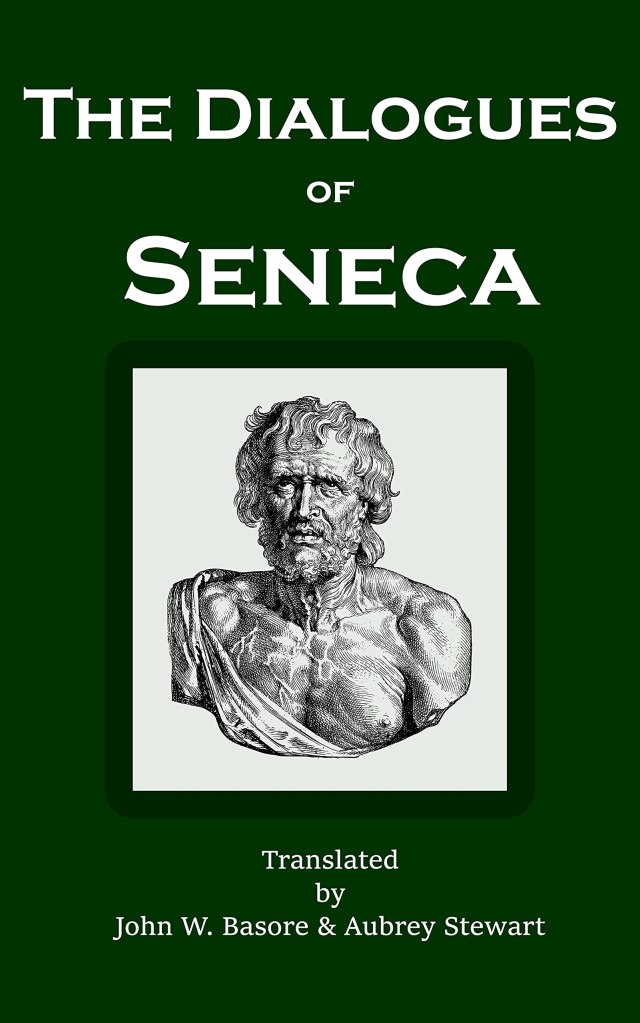
Stoicism is one of the most personally relevant and valuable philosophies you can study. Marcus Aurelius’ Meditations make for an ideal, demonstrative immersion into stoic ideas, but Seneca presents his Dialogues in a more educational fashion, as opposed to Meditations, which were not intended for public edification. Presented in the fashion of the earlier Greek dialogues (like Plato’s), most of them revolve around the notion of “the wise man,” a kind of ultimate goal for which all human beings ought, according to Seneca, be striving.
Sometimes, that wise man can seem neither wise nor human. In On Anger, Seneca proposes that the wise man should not be angered even if his enemy slays his family, burns his city, and tortures him, but should instead consider that his enemy took nothing of true value to him. Now, it is one thing to separate oneself from material things, to take with equanimity the loss of fortune or property, but to say that you should not be angry about the loss of family because it was not of value to yourself? That does not strike me as stoicism. Stoicism is not about the excision of care, or emotion, but rather about the way in which the wise person approaches those things and responds to them.
His other dialogues, though, are not quite so extreme. On Providence, On the Tranquility of the Mind, and On the Firmness of the Wise Person are much more in line with traditional stoic philosophy, which, if I had to reduce it to a single idea, is to not be unduly disturbed by those events which are beyond your control. I found several of these quite insightful, although because they are intended for education, and not for personal reflection, they are somewhat disingenuous at times, and Seneca seems more interested in posturing with references to the Ancients. He also seems desperate to justify not being the perfect “wise man” (or even getting close). This is on especial display in On Leisure and On the Happy Life, which seek to explain why it’s acceptable for the would-be philosopher to live in relative luxury and focus on developing his own mind instead of applying himself to the public good and abstaining from indulgences. Yet, he manages insightful observations in On the Shortness of Life, which notes that life has been allotted in the appropriate length, but that people spend it too cavalierly – they are stingy with their property, but loose with their temporal fortune.
The collection that I read concluded with On Clemency, which did not fit with the others. It was written as a dialogue to Nero and discusses clemency as a virtue specifically in the context of rulership, which is rather ironic knowing some of the history of Nero’s reign. After the extensive discussions of how the stoic should not have any fear of a ruler, the pandering tone of On Clemency struck me as jarring and undermining to Seneca’s entire message. It also emphasizes the hierarchical assumptions of Roman civilization, which are at odds with the humility suggested by stoicism.
While Seneca’s Dialogues are considered amongst the classic stoic texts, I found them far less insightful and timeless than Meditations. For all of Seneca’s discussions of high-minded philosophical concepts, his writings read as far more period-specific and influenced by Seneca’s environment than I would expect from a stoic. It gives them a less enduring quality to read today…but it is worth recalling that I am comparing a piece of writing that has endured two millennia to other writings that have endured a similarly long time. Just because Seneca’s Dialogues are not as strong as other Ancient works I’ve read and reviewed does not mean that they survived all these centuries for no reason. They are still worth reading, and have a place in the studies of anyone pursuing stoicism.
 IGC Publishing
3 thoughts on “Dialogues of Seneca (The Younger) Review”