
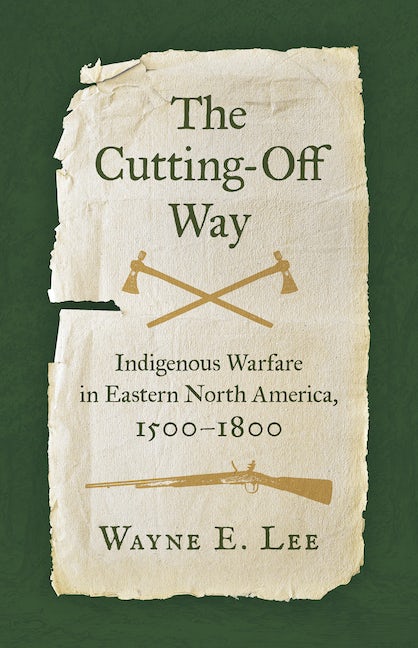
Economists talk a lot about “natural experiments.” Since constructing an economically relevant experiment along the lines of a traditional scientific experiment is somewhat impossible, or at least impracticable, economists will instead write papers and do studies of instances in histories or of places in the world where particular conditions existed that allow them to at least partially isolate the variables in which they are interested. This idea of “natural experiments” has relevance beyond economics, especially in fields like anthropology, psychology, and other, human-centric sciences. Sometimes, I think that the protracted isolation of the “old world” from the “new world” – that is, the lack of contact between the humans of the Americas and the humans of Asia, Europe, and Africa for some ten thousand years – represents the most significant natural experiment anyone will ever study (at least until we have a space colony that gets cut off from the rest of the species for a few thousand years). If only it were easier to study.
The problem is that, almost universally, the indigenous peoples of the Americas did not write things down. This is not exclusive to the Americas, as plenty of peoples in other parts of the world also did not write things down, but in places like Europe, Africa, and Asia, peoples that did not write tended to, over time, rub against peoples that did, and end up documented, more or less naturally, through them. Not so in the Americas, at least until the onset of “contact.” Lee uses the term to mean when American aborigines encountered outside (mainly European) peoples, or their follow-on effects, for the first time, and I shall mimic him. He calls the period before contact “prehistory,” and the period after “history,” referring to the original meaning of those terms, where prehistory is the period before things were written down, and history comes once writing commences. Thus, in trying to examine this greatest natural experiment, scholars are reliant on a combination of scant physical evidence, and the documentation that occurred post-contact. The latter, though, as valuable as it is, also represents the single largest confounding variable the “experiment” could have, and parsing Native society prior to contact based on that evidence is a treacherous task.
In The Cutting-Off Way, Lee more than rises to the challenge. Rather than engaging in “Russeauistic retrospective utopianism” (that’s a real quote – scholars can get nasty with each other), Lee presents a nuanced, complex portrait of indigenous warfare during, prior to, and just after the contact period, examining the question from the tactical, operational, and strategic levels of war. In doing so, he helps to make sense of a period and of outcomes that can seem, at times, nonsensical. If you ever look at the history of hostility between the Native Americans and the settlers, and wonder how it got the way it did, a lot of it will make more sense after reading this book. Rather than calling it a culture clash, which seems to diminish the issue, think of it as a slow, painful grinding of mismatched gears, where neither understands the other, but both know they don’t quite fit together properly.
Especially in addressing such sensitive and charged topics, that nuance is important. Many histories I’ve read shy away from examining the issues that Lee examines in The Cutting-Off Way, and those that don’t are prone to oversimplifying or imposing their own assumptions upon the data. I’m sure that Lee brings his own biases to his study of this natural experiment, but he does an admirable job of attempting to account for them, and he repeatedly acknowledges the difficulty of ever wholly grasping another culture and all its nuances.
The Cutting-Off Way presents the indigenes and their habits of conflict not as helpless victims, violent savages, passive nature-loving utopists, but as complex peoples with motivations, mores, and ideas of warfare as developed as their old-world counterparts’, encapsulated in the idea of “cutting off.” Native peoples had shared expectations of prisoner treatment, territorially conquest, and the conduct and usual outcomes for conflict that were suited to their environment, even if they were alien to the Europeans. That mismatch, in Lee’s telling, was a major source of the conflicts that arose between settlers and natives.
I make a light study of military strategy, mostly to better capture such concepts in my own writing, and it was with that in mind that I first added The Cutting-Off Way to my reading list. In fact, I had a specific story in mind for which I thought a better understanding of the tactics and stratagems employed by Native Americans in warfare would be informative (Wellspring of Nations is the tentative title); instead, as usual, I am left reminded that I may never capture the complexity and wonder of real humanity in my fictitious musings. The Cutting-Off Way does address military matters – again, at tactical, operational, and strategic levels – but to call it a military strategy book is far too limiting. No, this is a history book, written though the lens of warfare, and perhaps the best treatment of its kind I’ve encountered (for any society, not just for Native American matters). I highly recommend you read Lee’s The Cutting-Off Way.
 IGC Publishing
6 thoughts on “The Cutting-Off Way Review”