
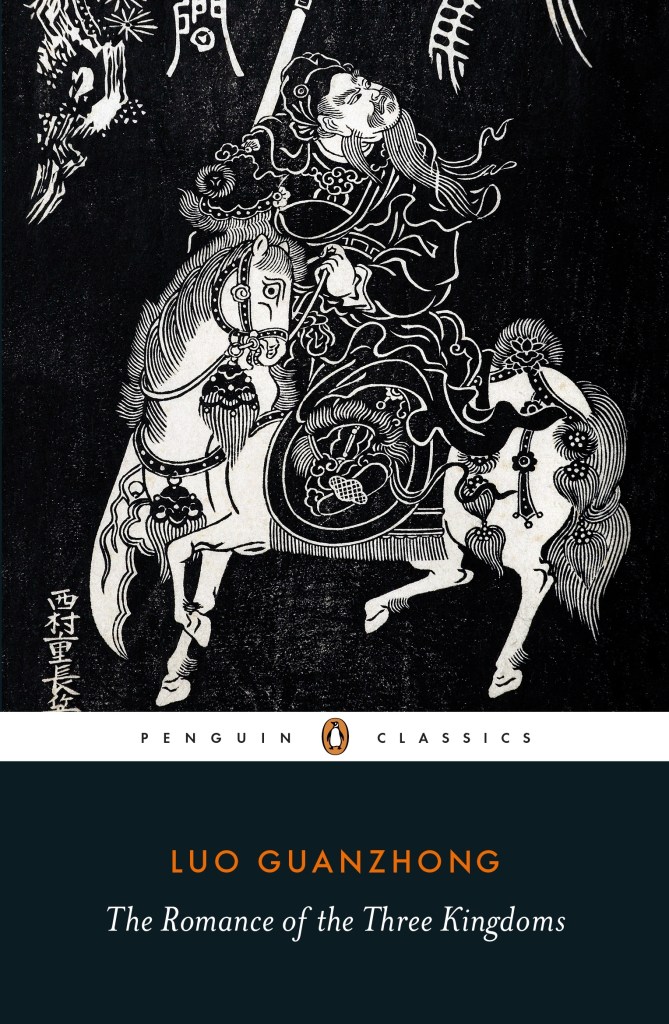
Plenty of modern civilizations can trace their heritage to ancient times, although what we mean by ancient can vary. The significance and continued impact of that derived heritage can also vary, and while some names survive and others disappear, the more salient point is continuity of culture. There is perhaps no culture in the world that leans into its heritage as much as China does today. China is fond of boasting of a continuous civilization stretching back millennia, and even leverages archeology to support its claims to modern influence and territory. Even schoolchildren are taught this idea that China as a nation has existed continuously longer than any other, but this masks the strife, rise and fall, and turmoil of the numerous civilizations and dynasties which have ruled that region since ancient times.
China’s Han dynasty lasted from roughly 200 BC to about 200 AD, if you base it off the official emperors, but this masks profound turmoil at various times during those intervening centuries. Romance of the Three Kingdoms follows the strife and dissension existing for about the last fifty years of the Han dynasty, leading up to the start of the Jin dynasty, during which period arguably no dynasty existed, with the region instead divided into three kingdoms. It is this period which Luo Guanzhong wrote his epic about in the fourteenth century, based in large part on the historical Records of the Three Kingdoms, written in the third century.
Sometimes likened to a Chinese Odyssey, the story is epic in a literal sense, at some eight hundred thousand words over one hundred twenty chapters, and its structure has more in common with modern storytelling than you might expect. We have Liu Bei, the primary protagonist, who starts the story living in relative simplicity, a descendant of the imperial clan, and is loyal to the emperor. We have his oath brothers, Guan Yu and Zhang Fei, who are great warriors with powerful weapons, fighting against a rebellion, then being passed over for recognition, and going through various adventures as they rise and fall in favor and prominence. It takes some time to realize these are the main protagonists, but once you do, it can be easy to forget you’re reading about a very different time and place.
That is, until someone bites off their own finger to prove a point, or one of the “good guys” poisons his guests at dinner. Han Chinese ideas of acceptable, even laudable, behavior were quite different from the conventional ideas of honor and morality depicted in most of the stories I read, whether ancient works of Western literature or recent works of speculative fiction. Different, too, is the acceptance of, and expectations for, authority. Even sharing many of the rebels’ complaints, the main characters never sympathize with the rebels, nor accept them as allies unless they foreswear their rebellion. Everyone always claims to be fighting on behalf of the emperor, even when that emperor is a largely useless figure, or beguiled by the interests of the court eunuchs.
The battle scenes are largely familiar, though, following the pattern of most other ancient works I’ve read, where heroic figures go before their armies and engage in single combat before the main battle begins, often drastically affecting the resulting conflict. It is difficult to say how much this is an affectation of the storytelling and how much this may have been how ancient battles really transpired. In a divergence from the Western tradition of similar combat, however, Luo documents a willingness by third parties to interrupt, interfere with, and otherwise sabotage these duels, including by teaming up, firing arrows from afar, and other tricks which might be considered underhanded in other cultures. No one in Romance of the Three Kingdoms finds these behaviors odd or reprehensible.
At points, the story can feel repetitive, especially when the battle scenes start to run together, but the intrigue and scheming, and the fascinating characters, help preserve its momentum. So, too, does its unpredictable nature. Aside from the three main protagonists, I often couldn’t tell with whom other characters might ally before they committed forces, and the omniscient viewpoint manages to present even the supposed antagonists as, if not precisely sympathetic, at least relatable. I read some critiques that claim Luo was engaging in a certain amount of temporal politicking with whom he depicted as “good” versus “bad,” but I did not find this to be the case. Even Cao Cao, described in one source as the “consummate villain,” doesn’t read so much like a villain as like someone who happens to take the opposite side.
How much events almost two thousand years ago, written about in a book seven hundred years ago, impact Chinese culture today is an impossible question to answer. If you’re looking, I do think there are some insights to be gained on modern China, or at least threads that carry through to the present, like the interaction with authority, respect for ancestry, and a certain endurance that is difficult to capture in words. The version of Romance of the Three Kingdoms which I read opened with a line about the cyclical nature of dynasties, which perhaps captures best both the theme of the book and a core strand permeating into modern China. That’s not the main reason to read it, though. Like other ancient literature, it offers the chance to immerse yourself in a vanished place, time, and people, one that is, at least if you have my background, more alien to me than some of the others about which I’ve read.
This was a period of time and place with which I was unfamiliar; I suspect I learnt more of this part of history from a semi-fictional epic than from any small study of it I may have done before. It was a worthwhile pursuit, and rightly deserves its place on a list with other masterpieces of ancient writing. If you’re continuing your tour of ancient literature – and I was naïve for thinking I would run out of core ancient texts to read in a year or two – make Romance of the Three Kingdoms part of it.
 IGC Publishing
4 thoughts on “Romance of the Three Kingdoms Review”