
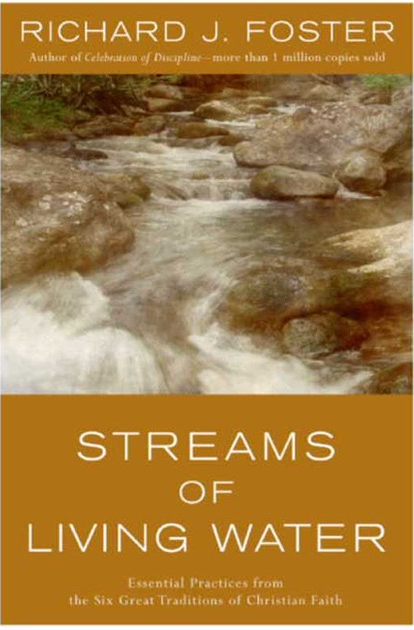
Between this review, and the one for the book of Genesis, you might be getting the wrong impression about my religiosity. Then again, with phrases like “God seems to be figuring it out as He goes” popping up in that former review, perhaps not. In truth, my interest in religion as a whole – from historical, cultural, worldbuilding, humanistic, academic, belief, moralistic, philosophical, and ideological perspectives – is probably more extensive than my interest in any one particular religion. This book would not have ended up on my reading list were it not selected as a discussion book in a group of which I’m a part and, in truth, it did not provide me with the kind of insight which others ascribed to it. Doubtless, this is testament to how much of your experience with a book is based on what you bring into it, not just on what is within its pages.
Of particular interest to me in recent years is the role of tradition in religion and belief. I reflected a little on this in our review for Sack’s Haggadah, and I considered Streams of Living Water, organized as it is around various “traditions,” a way to explore the role of traditions in Christianity, which my own religious experience has not particularly emphasized, at least not to the same extent that the Jewish tradition seems to, with its profound recollection of the Exodus and its emphasis on memory and the recreation of history. Perhaps it is the nature of Christianity to be less focused on traditions in that sense, though, because Foster means something rather different when he talks about the faith traditions or faith streams. Indeed, one could almost go so far as to say that Christianity is a more forward-looking, future-oriented religion than the Judaism from which it arose.
The book is well organized, split into six sections that each focus on a different “stream” of Christian faithful living. Each of those sections is further divided to include a historical example of that stream, an example from the Gospels, details about enacting the stream, its promises and perils, and instructions on integrating the stream into one’s spiritual and material life. If only Foster’s writing (or his editor) possessed the same discipline as the book’s structure. His incessant use of exclamation points, and overuse of conjunctions in lists, were irritating by the time I finished the first chapter, and downright obnoxious by the time I finished the book. Occasionally using conjunctions between every element of a list can be useful for emphasis or rhythm under certain circumstances, but using the technique for every list leaves me wondering if Foster and his editor don’t know about the invention of commas.
As for the exclamation points, they seem to serve as a copout. Any time Foster is at risk of plunging deeply into knotty philosophical or theological issues, the kinds I was really hoping the book would wrestle with, he deploys an exclamation, often in the framework of a rhetorical question, that amounts to avoiding such deeper thinking by repeating an emphatic “God is great!” as a solution and answer to any further questions. It’s probably expected that the reader of a book about religion will be willing to take things on faith, but I am not that reader – or, at least, I think the level of analysis available to our human faculties is greater than that on display here.
In a few instances, Foster also demonstrates an ignorance of, or preference to avoid, difficult historical questions. This is especially true with regards to the adoption of Christianity as a “mainstream” religion, and the compromises made to accommodate this. Christian pacificism, for instance, was a particularly difficult question for the early church when it stopped being a fringe movement and became a major religion (and especially after it became a state-sponsored religion), but Foster wrestles with none of the implications, historical or modern, of those positions. Without exploring this dimension, Foster leaves unplumbed significant portions of Christianity, past and present, and fails to address significant portions of his potential audience who are Christian without being pacifists. His discussion of vocation is similarly limited. Despite writing that the work of farming, cooking, caretaking, et cetera are as noble, praiseworthy, holy, and legitimate incarnations of the vocational stream as preaching and other direct forms of religious service, the larger context of his chapter on the vocational stream contradicts this stated message. His examples of vocational service to God are always about using vocation explicitly to further God’s ends, not about being Christian in pursuing one’s ordinary, everyday vocation. It is easy to depict some vocations as being “in service to God” when performed by a Christian. It is harder to answer how the solider, particle physicist, accountant, or astronautical engineer is embracing the vocational stream in their daily life, not merely in using the skills of that vocation in Church-related matters.
To be fair, significant stretches of the book were well-reasoned, I appreciated the historical examples (even if I think the book’s message would have benefited more from less perfect paragons of each stream), and the only marring in these portions were the aforementioned lists and exclamation points. Even here, though, Streams of Living Water suffers from a paucity of deeper thought and original insight. The core of the problem is that Foster approaches the question of how to live out each stream from a position of assumed acceptance. In other words, Foster writes as if it is a given that everyone should desire to live these streams in an apostolic way, and simply needs guidance on how to come closer to doing so, whereas I approach the book from a position of skepticism (as I try with most ideas), without immediately accepting the assertion that a given stream, or a given paradigm, is definitively right. Without that shared foundation, the rest of the contents are somewhat undermined.
This is not a bad book. I feel I should emphasize that, given the generally critical tone of this review. Streams of Living Water is not a bad book…if you are already a reasonably faithful Christian who accepts the same or similar assumptions to Foster, and who is seeking to further incarnate the various faith streams he discusses in your daily life. That is really its intended audience, and for them, I suspect it would be an easy 3.5 or even 4 stars. If you don’t share those assumptions, though, and certainly if you do not already accept that primacy of the Christian faith, this is not the book to use to expand your religious education and understanding, because it does not have that depth of thought and analysis. Foster wrote a how-to book, where I thought I was getting a theology/philosophy book. Once again, I am victim to mismanaged expectations.
 IGC Publishing