
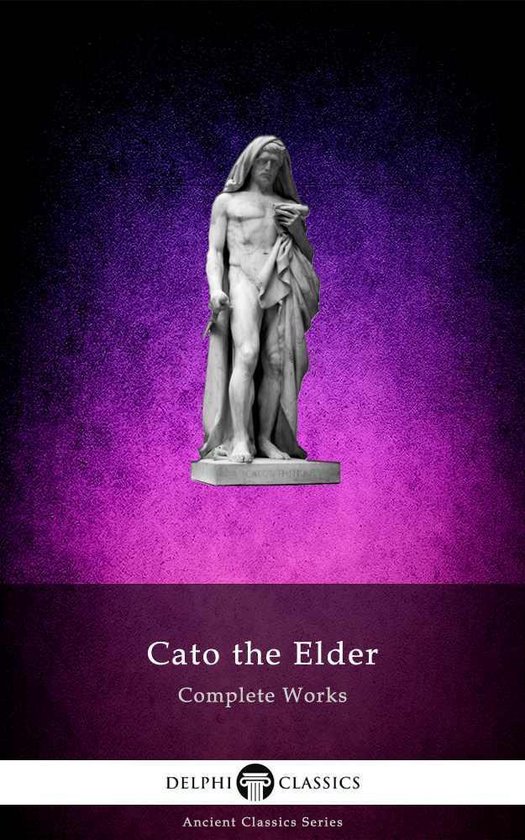
Biographies of ancient figures are a challenge to write, and often consist of speculation and inference more than they do facts; the paucity of information means we struggle to know even basic details about many of these historical figures, and the drastically difference cultural contexts in which they lived means we cannot approach them in the same way that we can a more modern figure. Plutarch circumvented all of these problems writing his biography of Cato – by writing it within hundreds, instead of thousands, of years after the Roman’s death.
Plutarch is most famous for his Parallel Lives, which is on my reading list, so there will be a review for it eventually. He wrote other biographies and texts, though, including this biography of Cato which accompanied my copy of On Agriculture. For as famous as On Agriculture is, we don’t have other extant works by Cato, so we must learn about his reputation from other sources, like this biography. It paints a rather different picture of the famous Roman statesman than is perhaps suggested from simply reading On Agriculture. Quiet descriptions of the infinite utility of cabbage somehow don’t lead one to think of a man who would conclude every public speech with the line “and Carthage must be destroyed.” According to Plutarch’s sources, anyway. That particular tale could be apocryphal, but it is evident that Cato was far more than a peaceful agrarian.
In many respects, he was a model Roman citizen, and Plutarch depicts him as such. He was a public servant, a statesman, a rhetorician, a brave soldier and military leader, a thoughtful father, a dutiful master…in general, a paragon of elite Roman virtue. Plutarch, though, is no uncritical biographer simply writing a piece in praise of a memory; he includes numerous critiques of Cato’s conduct and character, including his single-minded dedication to the destruction of Carthage, his treatment of slaves (and free people, too, for that matter) as commodities whose utility should be maximized without regard for their personhood, and his ostentatious (and sometimes false) devotion to simplicity. There is also the matter of his late-life marriage to a younger colleague’s daughter, which is certainly in bad taste to the modern reader, and seems to have discomfited Plutarch, as well, albeit for perhaps somewhat different reasons.
I wonder how much the plaudits for On Agriculture are influenced by the picture of Cato painted by Plutarch in this biography. Aside from describing Cato’s life, Plutarch also discusses several of his works and speeches which were recorded and accessible in Plutarch’s time, but have not survived to reach us today. Considering some are compared to the famous Demosthenes speeches, these would have been a treasure trove of insight on the time and fantastic examples of rhetoric in action.
This might not be worth reading on its own, but it provides interesting context in association with reading On Agriculture, and it augments other reading I’ve done on this fascinating period in Roman history, surrounding the conflict with Carthage. Plutarch’s writing in this brief biography certainly bumped his Parallel Lives up a few places on my reading list.
 IGC Publishing
2 thoughts on “Life of Marcus Cato the Elder Review”