
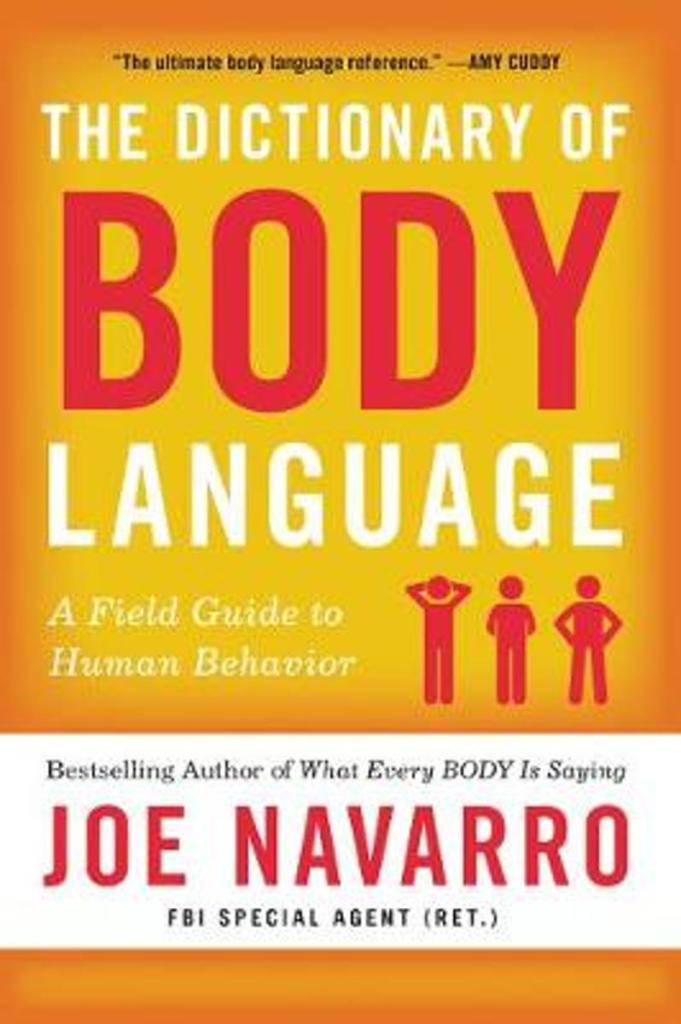
Some books I read because they are intellectually interesting. Some books I read because they have compelling stories or otherwise purely for enjoyment. Some books I read to improve my understanding or abilities in some specific area. And then there are books like The Dictionary of Body Language, which I would consider fits into all three of those categories and others besides. It will go onto the list of the most broadly useful and applicable books I’ve read, alongside books like Human Dimension and Interior Space, even if it doesn’t make 2023’s top five list.
This book spent a very short amount of time on my to-read list, and it caught my attention in the first place because of its potential applicability to writing; I thought I would be able to bring more intentionality and nuance to descriptions of character action and nonverbal communication in my stories if I read this book, and that is certainly true, although not as directly as one might hope – it will take some effort to translate the book’s insights into useful descriptions and actions for storytelling. I did not expect, though I should have, that I would find The Dictionary of Body Language so broadly applicable to day-to-day ordinary life.
Sometimes, it feels like I am constantly acting while interacting with people in the mysterious and elusive “real world,” a sense to which I imagine other people who are not naturally emotive can relate. I’ve become fairly adept over the years since my Vulcan days at presenting a reasonably relatable façade to the world, but at least in my head I know that there is a level of artifice to it that might be noticeable. The Dictionary of Body Language can provide a great deal of insight into how to do this better. While I’m not going to say that all interactions are manipulatory, because that has a negative connotation (and a friend of mine told me extremely explicitly not to), I like being able to have a degree of awareness and control over how I am perceived.
Speaking of perceptions, it is perceptions of others for which the book actually seems to be written. The main intent is to help people understand the body language that they observe in others on a daily basis, and it’s effective in that task, too. Of particular interest to me were the thoughts on what body language is innate, and what is learned or cultural, and where the commonalities and differences lie. So, if you catch me watching what you do with your hands and the way your chin twitches, you can blame the books I read.
While I read it straight through, The Dictionary of Body Language is really intended as a reference book, something to which you return to look up a particular nonverbal signal and its potential meanings when you observe it, slowly building your library of nonverbal signals that you can interpret yourself, without needing to reference the book. It takes some effort to put together the discrete observations in the book to form an overall nonverbal in a real person, which is the only thing I could see adding to the book – some kind of synthesis section demonstrating how all of the discrete observations listed can be put together in that always elusive real world.
This is a book I can see referencing many times in the future, the kind of book I might get in hardcopy, too, just so that I can have it sitting by my desk to flip through while I’m writing and need to include a particular nonverbal to help with foreshadowing or character evocation. Whether for writing, acting, or interacting with people, I highly encourage you to add The Dictionary of Body Language to your reading list.
 IGC Publishing
One thought on “The Dictionary of Body Language Review”