
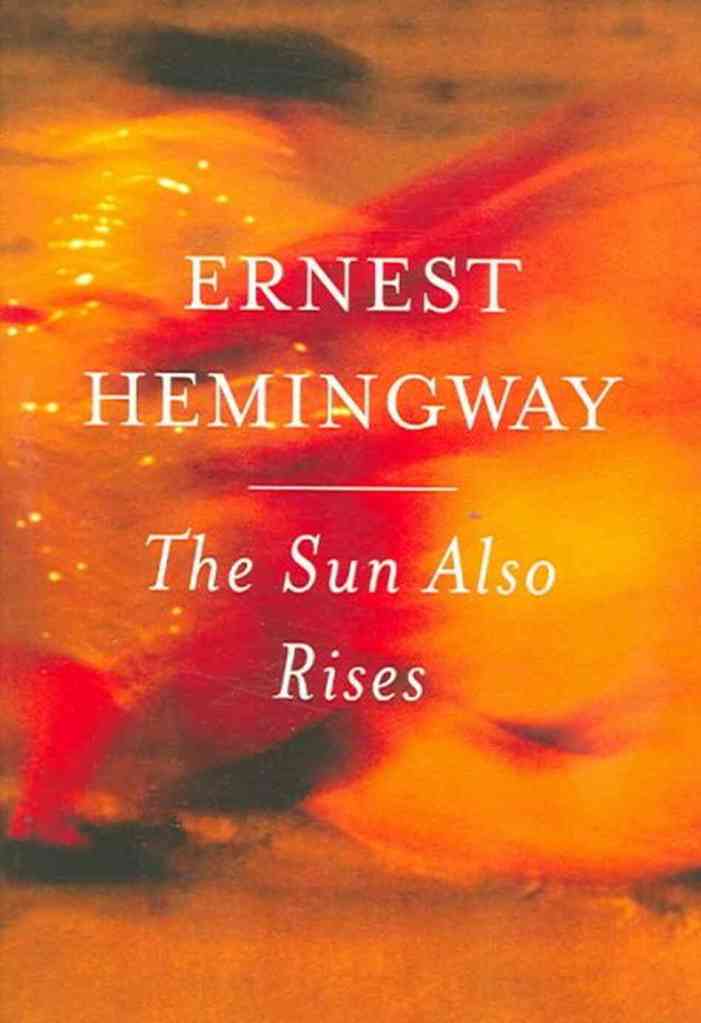
For all I remember hearing about Hemingway and his writing in school, I don’t think I ever ended up reading more than a short story or two of his. At some point, The Sun Also Rises got onto my reading list, and I finally got around to reading it on a recent vacation. With a reputation for brevity, concise prose, and adventurous living, I thought it might make an excellent vacation read. Maybe a different Hemingway book would have been a better choice, because The Sun Also Rises is a slow, angsty, plotless piece that meanders drunkenly through western Europe without anything every really seeming to happen.
Some books, I can enjoy for their plot even if the writing is lackluster. Some critics would even say that’s the case of something like Brandon Sanderson’s concept of transparent prose, although those same critics seem to think that a book has to be depressing in order to win awards. Even when those awards are for books written for fifth graders. Anyway, in The Sun Also Rises, I found myself trying to do the opposite. Hemingway’s writing really is enjoyable, pithy and concise while conveying volumes through implication, association, and reference, even when his novel is lacking in substantial happenings.
What is the plot? I’m really not certain. I thought I knew, a few chapters in, when one of the major characters had a midlife crisis and declared he was going to South America. Perfect, I thought, since this is a Hemingway novel and he has a reputation for being adventurous and doing just those sorts of trips in real life. The rest of the novel would be about the trip to South America. Except the trip never happened. The most adventurous thing that happens is a weekend fishing trip in which there seems to be more wine drinking than fishing, which is probably realistic to most modern fishing trips, too. Instead of adventures, most of the novel has all of the characters in varying states of drunkenness, wandering around Paris and sometimes Spain.
My copy includes an essay in the back, talking at length about “the lost generation” and how significant this novel is in capturing their struggles and experiences. Maybe that’s true, although I have a hard time believing that the minor interpersonal dramas of a cadre of affluent, middle-aged, expatriate writers are really representative of the struggle shared by the typical World War One veteran. The problem remains that I don’t read stories to read about ordinary people and their ordinary struggles in their ordinary, day-to-day lives. Stories are, to me, fundamentally an opportunity to explore the extraordinary, the hypothetical, that which is not real but could be, or that which is real but seems like it could not be. They are, in other words, not about the merely ordinary, and I found The Sun Also Rises a disappointingly ordinary book from a purportedly extraordinary author.
 IGC Publishing
You’re problem with the book is displayed in your statement: “The problem remains that I don’t read stories to read about ordinary people and their ordinary struggles in their ordinary, day-to-day lives. ” Do you ever do any research about the books you’ve chosen to read before you read them?
LikeLike