
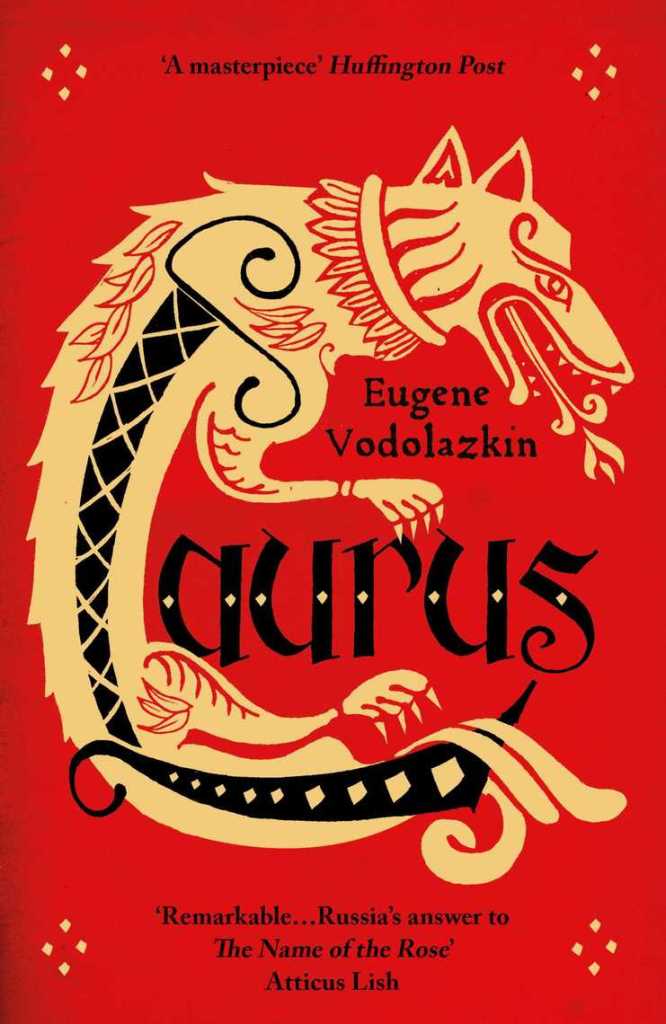
Faith is a difficult topic to write about or discuss. In a sense, it is like those assumptions that we hold so closely and firmly that we do not even realize they are assumptions – they are simply a part of how the world is. In a world of decreasing religiosity and increasingly easy access to answers (whether they be right, wrong, or incomplete is another matter), faith’s role in our lives is diminished, and thus our understanding of it. It becomes something unapproachable, something uncomfortable. Writing it in such a way as to make it understandable to skeptics and believers both is a unique challenge, but one to which Vodolazkin rose admirably in Laurus.
Need a miracle be the occurrence of something physically impossible, or need it merely be something unexplained? That is the question I probed at some length in Artificial Miracles, and it exposed my own predispositions and notions regarding miraculous events and occurrences. Laurus proposes an alternative, and it presents it so subtly, so convincingly, that you almost don’t realize what it’s proposing until you stop to think about it. In Laurus, miracles are those events which you believe to be miraculous. Sometimes in the book that means healings or other events that could have natural explanations but that the characters believe are divinely instigated, and sometimes it means things that are genuinely inexplicable, or at least inexplicable with the information the narrator provides, but they are presented the same. It is less about the content of the miracle than about the belief, the faith, of the individuals involved. When Laurus must be fed or face starvation in the wilderness, it doesn’t matter if the loaf of bread he brought from the monastery “miraculously” lasts longer than it should, or if villagers fortuitously begin bringing him offerings – both are equally divine intervention, both are equally miracles.
What makes this presentation work so well and become so convincing and perspective-shifting is the richly researched and extraordinarily detailed historical context which Vodolazkin conjures. He uses a third-person omniscient narrator that manages to place the reader firmly into the times and places the story invokes, with a realism that matches the best historical fiction, or straight history, that I’ve read. At times it can be gritty, befitting the time period, but it never descends into the casual, wanton darkness, grittiness for the sake of grittiness, of something like Game of Thrones (which I did not enjoy). The closest piece of writing to which I can think of comparing it would be Lymond Chronicles, although they are radically different in most other ways.
That third-person omniscient narrator is vital to the story’s approachability, as a limited viewpoint focused on Arseny and his thoughts would have been almost impenetrable to a modern reader. Not that the narrator is strictly bound to a “period” voice; it seems to revel in the occasional anachronistic reference, idiom, or turn of phrase, which somehow serves not to break the flow of the story but to provide half a beat in which the reader can breathe before returning beneath time’s surface and immersing in Russian history.
Yes, this is a translation from the original Russian, but it is excellently done, and at no point did I feel there was awkwardness resulting from that linguistic shift. The note at the beginning of the book explaining some of the translation decisions, especially with regards to naming conventions, helps frame how the translation is done, and demonstrates why it is far easier to translate a work in collaboration with a living author than to attempt to make inferences regarding meaning for historical translations, not even considering the significant absence of lacunae in a modern piece.
I came across Laurus in a review for Vodolazkin’s new work, A History of the Island. After how much I enjoyed Laurus, I’ll certainly be adding A History of the Island to my reading list (although, knowing me, it might be some time before I get around to reading it). In a way, this is akin to my idea of historically adjacent fantasy, except this is far closer to history. It’s steeped in it, and it reads and contextualizes as more historical than most historical fiction. If you are fascinated by faith, and constantly inquiring of history, like I am, then Laurus deserves a place near the top of your reading list.
 IGC Publishing
6 thoughts on “Laurus Review”