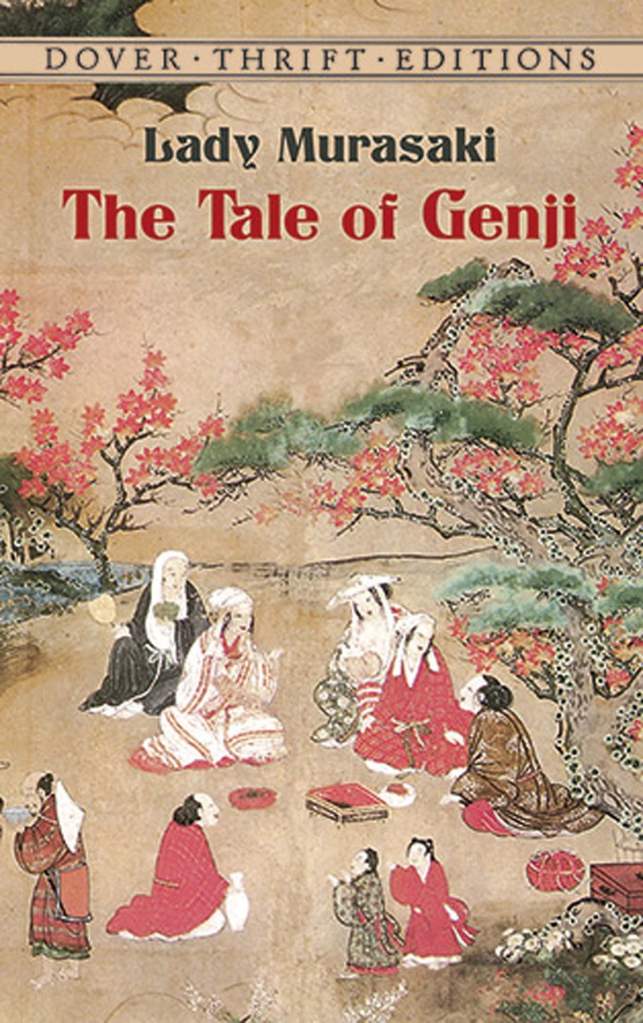
I really don’t know how to rate this book. On the one hand, it is well-written, well-translated, and culturally interesting. On the other hand, it is incredibly boring. Granted, boring is not an objective metric, but what metric do I include in these book reviews that is objective? The Tale of Genji may be the world’s first novel, but that does not mean it is the world’s first exciting novel. Maybe, before picking it up, I should have thought to ask what genre the world’s first novel is.
Because The Tale of Genji is a mixture of tenth century Japanese court intrigue and a romance novel. The cultural and courtly elements were fascinating to me as someone who has more than a passing interest in history, but romance is not really my genre (someone once gave me the Twilight books to read, and I made it through the first two before I gave up on finding an adventure to overthrow the immortal vampire from somewhere in Africa who secretly bred the humans from which he came into better prey).
If the plot couldn’t hold me, the same cannot be said for the characters. Lady Murasaki, who is named for a character in the text, manages to conjure incredibly real and lifelike characters. Hundreds of characters are named, and every one of them seems as full-fleshed and realistic as the most full-fleshed protagonists in modern stories, never mind side characters. Genji might be a spoiled not-prince who is consistently described as a paragon and considers going for a ride in the country with only five attendants for a covert affair “roughing it,” but he’s still compellingly written.
The writing itself is beautiful, and I suspect that reading it in the original Japanese would be even better, as is always the case with translations. Still, the translator does a remarkable job with the poetry, which suffuses the text almost as frequently as conventional dialogue, since much of the communication and courtship involves passing overwrought poems back and forth betwixt parties. I do not mean that the poems are badly done, but rather that the characterization of the whole society strikes me as extremely emotional, which is quite interesting. So is the idea of routine courtly poetry, which I saw executed in a somewhat similar fashion in a short story in a recent Writers of the Future collection.
So, can a book be both boring and fascinating simultaneously? If it can, then that would perfectly describe my experience with The Tale of Genji. Its writing, both prose and poetry, is elegant, its characters are richly textured and compelling, its cultural and historical elements are fascinating (as is ever the case for me with these historical pieces), and its plot was dull and nearly nonexistent in places. Still, if I can enjoy some books almost exclusively for their plots, then I see no reason we might not enjoy books that excel in other areas.
 IGC Publishing
One thought on “The tale of Genji Review”