
As expected, this week’s newsletter is short, with just four articles – and I would be surprised if you somehow missed the first of those, given the number of articles and editorials I’ve seen on the topic this week. AI continues to make waves in mathematics, and people continue to hyperventilate over it (whether because they applaud it or because they abhor it). I could write my own editorial on the subject, but I think that market is plenty saturated.

Riemann Hypothesis Duels
This news broke at the end of last week, too late to incorporate into last Saturday’s newsletter, so we’re starting off this week’s newsletter with a possible proof of the Riemann hypothesis. Actually, by the time this newsletter publishes, what is a possible proof as of this writing may be a verified proof. Alpöge’s announcement paper/essay is personal and apologetic, not what you might expect from a paper announcing a groundbreaking mathematical accomplishment; it nonetheless sparked immediate controversy, with another mathematician uploading a non-AI manuscript of a proposed proof which was in draft and which is much shorter than Alpöge’s version (the-music-of-the-primes.pdf). Quanta Magazine’s Transformation dispatch (Transformation | Quanta Magazine) is a solid resource for the latest developments on this story.
Read more here: remark.pdf
New Nonstick Coating
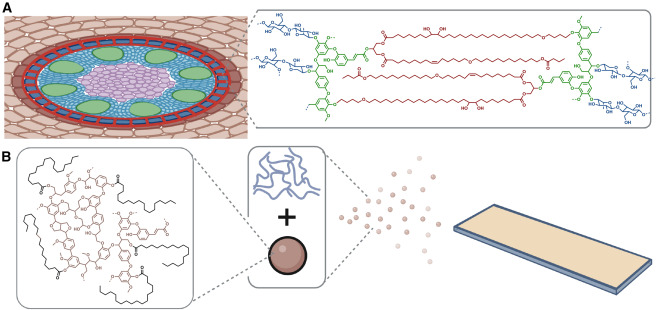
Here, the authors develop a nonstick coating which they claim is based on lignin and is biodegradable, while also being relatively inexpensive and easy to manufacture. It’s intended as an alternative to PFAS-based nonstick coatings, although there are some limitations which don’t make the headlines. First, it requires 5% by weight PLA binder. While ostensibly biodegradable, other studies have found PLA can vary in how biodegradable it actually is, and it doesn’t exactly break down as rapidly as the term suggests. The coating has low thermal stability, with a key metric coming in at about 187C as opposed to 524C for a PTFE coating (Teflon). Additionally, I saw no discussion in the paper of how the coating might interact with other substances. A common flaw in biodegradable alternatives like this is their tendency to do exactly what they’re designed to do – break down easily – which means you may end up having to replace the products using it more often. Perhaps it’s a form of planned obsolescence. That aside, it’s interesting work, and while it won’t replace PFAS materials entirely, there are plenty of applications where it could be preferable.
Read more here: Bioinspired and biodegradable fluorine-free superhydrophobic coatings – ScienceDirect
Forward Progress on Nuclear Spacecraft
This is a NASA update on the nuclear powered spacecraft project which is supposed to be both a significant technical demonstration of nuclear technologies for space applications and the delivery vehicle for an upcoming Mars mission. While the timelines remain excessively optimistic (as far as I can tell), it’s good to see some concrete decisions being made to advance the undertaking. That said, the history of spacecraft design is littered with proposals and even test articles for nuclear rockets, nuclear spacecraft, and dozens of variations thereof which failed to come to fruition, so I have a difficult time getting too excited about this effort at its current stage.
Read more here: Teams Lock in Mission Architecture for NASA’s SR-1 Freedom
Collapsible Drones
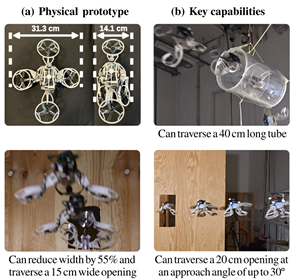
Drones have become both cheap and capable, but that doesn’t mean innovation in the space has stopped. Quite the opposite. This paper describes a particularly interesting approach in which a drone is designed to pass through gaps smaller than its standard dimensions thanks to folding propeller arms, and it is then able to recover and continue flying (in most cases). There’s a succinct and informative video summary, too.
Read more here: Task-Driven Closed-Loop Design Optimization of Passively Morphing Quadrotors for Contact-Mediated Narrow Gap Traversal
That’s all for this week. If you have questions or have a subject you’d like me to cover in more depth, let me know in the comments.

