Fantasy can be divided into four eras. First is the pre-Tolkien era, in which the genre began to evolve out of a combination of gothic literature, mythology, folk stories, fairy tales, and fictional narrative. Books like Phantastes and The King of Elfland’s Daughter are representative of this earliest era, and you can see how they were inspired by earlier works that share resonances with what is now the fantasy genre. Tolkien took this evolution and perfected it with The Lord of the Rings, ushering in a new era which I call the post-Tolkien slump. Written and workshopped over decades, and constituting a remarkable achievement, fantasy in the post-Tolkien slump was largely derivative and based on Tolkien’s seminal masterpiece. It took Robert Jordan’s Wheel of Time series to shake up fantasy and define a third era.
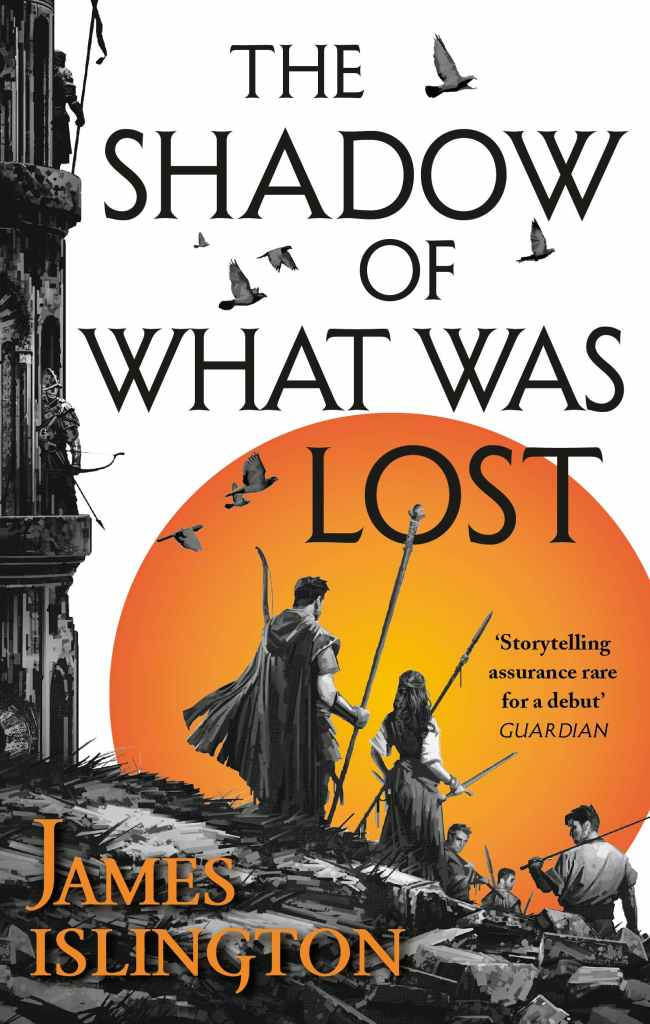
Now, we live in the fourth era of fantasy, driven in large part by Brandon Sanderson’s style of plotting, world-building, and hard magic systems. His stylistic trademarks have set a new standard for the fantasy community, iterating on and evolving from what Robert Jordan began, and this fourth era offers fantasy that uniquely appeals to a generation of readers who expect that everything can be rationally explained, a generation for whom the world is somewhat lacking in mystery and wonder and where the answers to every question are at our fingertips. That’s an essay in and of itself that I should probably write soon. The present point, though, is that, like finding interesting and original fantasy during the post-Tolkien slump, many of the new fantasy pieces I pick up today are somewhat derivative. The Shadow of What Was Lost struggled to rise above the current froth, but mostly fell short.
Modern fantasy is characterized by a few common traits: a more-or-less “hard” magic system that significantly interacts with the plot, a third person limited or first-person viewpoint, youthful, anachronistic characters, and a mysterious dark oppositional force. All of these are present in The Shadow of What Was Lost, and it made it difficult for me to engage with the story. Despite its objective excitement, its fast pacing, and its intriguingly original elements, I found myself bored.
By far the most interesting character, the most interesting aspect of the story, and the mystery that kept me reading, is the character known for most of the book as Caeden. The examination of how memory interacts with personality – how our experiences form our identities – and the mystery surrounding his past make him a far more compelling character with a stronger plot than any of the three primary viewpoint characters. Even though I’d solved the puzzle of his identity by the time the answer is officially revealed, how it is done is still satisfying.
Alongside Caeden, the story’s exploration of determinism versus free will and how the mentalities affect those who hold them in a world in which there is strong evidence in the form of visions and prophecies for predestination and determinism is probably the most interesting part, especially to someone like me who appreciates a side order of philosophy with his fantasy novels. I imagine that this will play a significant role (I hope?) in future books in the series as the characters explore their prophetic abilities more…but that presupposes that I will read the next book, which is by no means predetermined.
Once, I read fantasy and science fiction almost exclusively, and I was much less picky about what I ingested.; I didn’t necessarily object to reading a series about a magically powerful assassin right after reading a trilogy about a magically powerful assassin (there was a spate of assassin-fantasy books a few years back). These days, with my ever-expanding reading list and my efforts to vary what I’m reading next, I am more discerning in my choices. Plus, there are excellent, innovative pieces being published in the genre – Will Wight is offering something fairly unique, and Rothfuss’ books (if they ever come out) are compellingly original and spectacularly written – even if they can be difficult to identify. This review may seem critical, but The Shadow of What Was Lost is not bad. If I were reading it ten years ago, I’d probably jump right into the sequel. Today, though, I think I might prefer to save my reading time for something else.
 IGC Publishing
One thought on “The Shadow of What Was Lost Review”