
Though it’s not intentionally to balance out last week’s longer-than-usual newsletter, we do have a notable slimmer selection of stories to share this week. Fewer caught my attention to share with you, and I was also busier than usual, which means I may have been a little less thorough (or a little less engaged) with the literature.
Before we get into the articles, a brief programming note: I intend to publish a newsletter next Saturday, despite the Thanksgiving holiday, but I would not be surprised if it is again a bit of a shorter entry.

Good News, Bad News
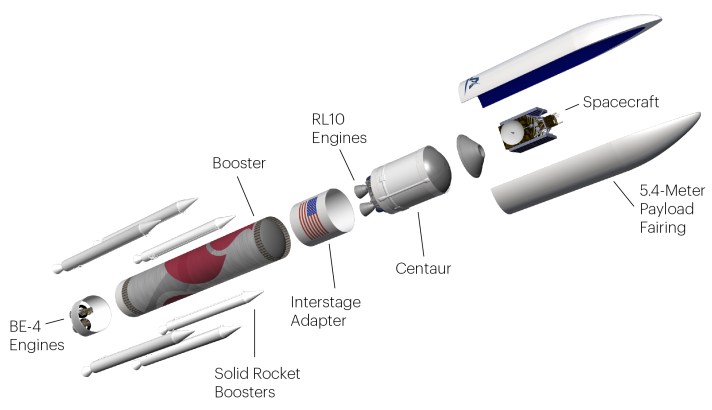
Last weekend was quite a weekend for rocketry. Both of these have been written about extensively already, so I won’t belabor the point. On the one hand is the spectacular and groundbreaking Starship catch. A lot remains to be proven to parlay this into the revolution in space launch which has been described, but this was a major milestone. As for the bad news: Vulcan’s failure, for a different cause possibly related to its BE-4 engine, is likely to cause at least another six-month delay, and may impact New Glenn, too (since it also uses BE-4). This for a rocket which has already struggled with other anomalies and with increasing its launch cadence.
Read more here: Vulcan rocket fails during launch, dealing major blow to SpaceX competitors – Ars Technica and SpaceX – Starship Flight 15
Massive Communication
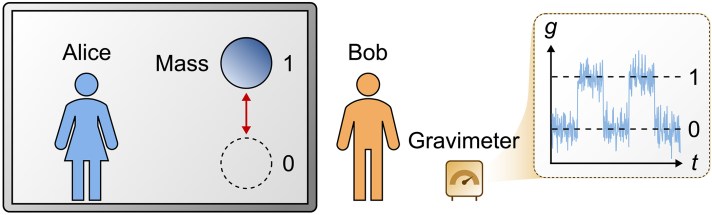
The theoretical basis for this work is quite simple. Well, it does require a sufficient understanding of the theory of general relativity to grasp the concept of propagation of gravitational waves through spacetime, but once the idea of gravitational waves is accepted, the basic premise of using them as a communications medium is quite straightforward. Far harder is the technical challenge of implementing such a communication system in any kind of practical way, given the relative weakness of the gravitational force compared to the other fundamental forces. I agree with the authors’ conclusion that gravitation-based communications have significant potential advantages over traditional electromagnetic methods, but I question the extremity of their statements; gravitational signals may not be “blockable” in a conventional sense, but that does not preclude the possibility of other kinds of interference.
Read more here: Unblockable communication with gravity | Science Advances
DIA Space Security Publication
Here is the latest update to the Defense Intelligence Agency’s unclassified examination of “Challenges to Security in Space.” There’s nothing especially groundbreaking here if you follow the industry, but it’s an informative document and an excellent resource if you’re not already familiar with some of the more concerning, military-related developments in space capabilities.
Read more here: Challenges_Security_Space_2026.pdf

NASA’s Science Fiction Magazine
Most of the NASA challenges I share and/or in which I participate are pretty technical in nature, usually with some amount of hardware engineering involved, but this one is a lot more conceptual and, frankly, fluffy. Basically, NASA is inviting the public to write science fiction stories, because that’s the best that can be said of prognostications looking fifty years in the future.
Read more here: Challenge: Public Input on Life and the World in 2075 – NASA
That’s all for this week. If you have questions or have a subject you’d like me to cover in more depth, let me know in the comments.

