
Welcome to the first edition of IGC Publishing’s science and technology newsletter, which I’ve given the working title of “Ideas and Innovations.” We have seven articles featured this week, which is rather more than I expect will be the norm, so I’ll jump right into it.

Air-Breathing Satellites?
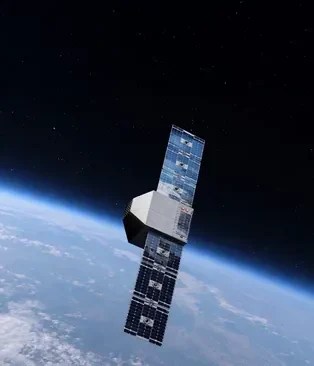
Is it a plane? Is it a satellite? That’s an easy question to answer, since the proposed VLEO spacecraft don’t generate aerodynamic lift and are therefore firmly in the category of satellites. VLEO, generally considered anything below a few hundred kilometers altitude, has generated a lot of interest for satellite operations in the last five years or so because of the advantages a low altitude presents for certain missions, like proliferated communications constellations and high-resolution Earth imaging. However, spacecraft experience significant atmospheric drag at these altitudes, severely limited lifespan and/or requiring large amounts of propellant for station keeping. Using the thin atmosphere as a propellant source for VLEO spacecraft has been discussed for a while, but a practical, scalable collector and thruster system has proven elusive. Kreios Space intends to launch a prototype air breathing thruster in 2027, but it’s not clear if they’ve overcome the significant challenges associated with making such a system practical.
Read more here: Exploring ‘very low Earth orbit’: The world’s 1st air-breathing satellite thruster could soon get a test run | Space
Deployable Launch Platform
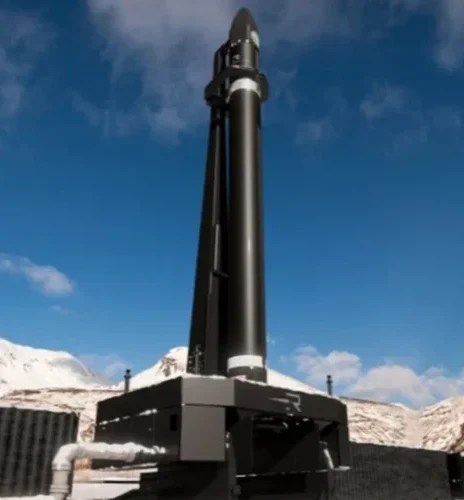
In the Victus series of missions for the USSF, Rocket Lab demonstrated a previously unprecedented kind of responsive space launch. They’re now intending to take that responsiveness in a new direction with deployable launch systems. Deployable launch systems aren’t new, per se, but a dynamically deployable launch system for a rocket of Electron’s class, let alone Neutron’s, would be a remarkable innovation. My biggest question from the announcement regards how much of the supporting infrastructure will be made deployable. In other words, will this be able to be set up in the middle of nowhere to launch a rocket, or does it need to be connected to some amount of supporting infrastructure for tasks like power and propellant transfer?
Read more here: Rocket Lab Unveils GHOST Deployable Launch System to Enable Responsive Space Missions Worldwide | Mon, 08/10/2026 – 16:09
Geo-Neutrinos from the Mantle
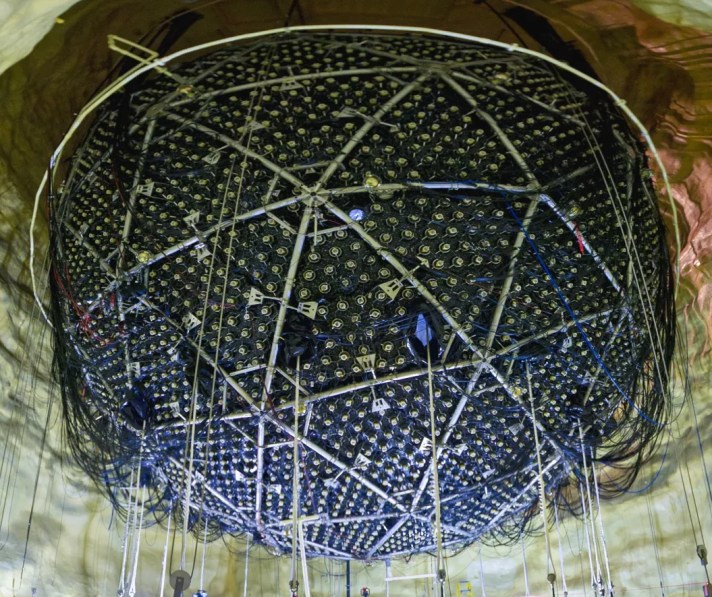
You’ll doubtless notice a preponderance of space related articles in these weekly newsletters, but that isn’t the only subject I intend to cover. This is a fascinating look at the possibility that the Earth may be generating neutrinos nonuniformly. There isn’t enough data to make any firm conclusions yet, but the discrepancies in neutrino measurements between different sites suggests that the mantle may not be as uniform as is generally assumed. On the one hand, it’s fascinating to think that some of physics’ most elusive particles are providing insights into the geophysics of our own planet. On the other hand, it seems a little obvious that a system like the mantle would be a lot more complex and uniform than our models of it upon closer inspection.
Read more here: Neutrinos From Deep Inside Earth Provide a New Picture of the Mantle | Quanta Magazine
LINK Mission Update
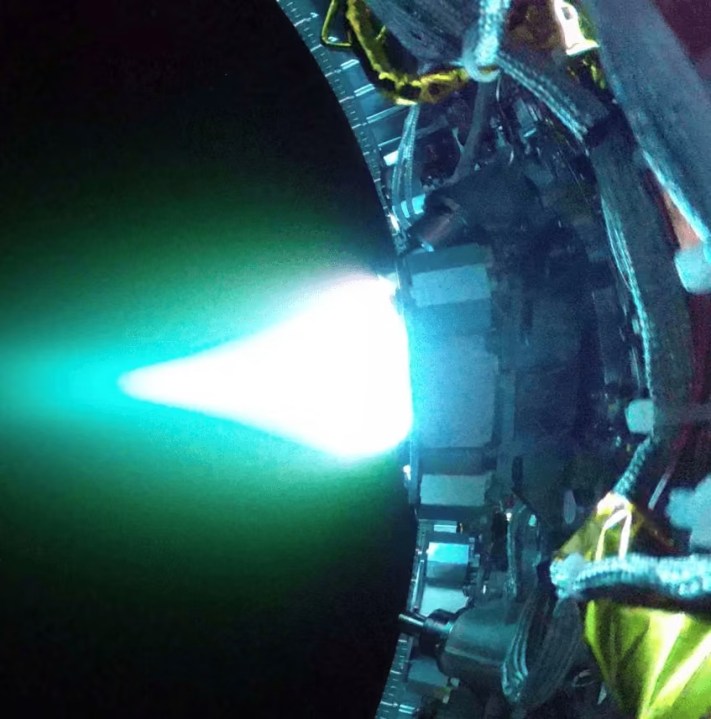
Speaking of atmospheric drag acting on low orbiting spacecraft, the LINK mission to boost the rapidly deorbiting SWIFT observatory posted an update on Tuesday regarding their ongoing attitude determination and control problems. They claim they created and uploaded a flight software update that will enable the spacecraft to continue its mission to rendezvous with SWIFT despite the loss of multiple attitude control modes and actuators. I’ve yet to find details on the specific anomalies which occurred on the spacecraft that led to its current state – the Katalyst team is probably more concerned with getting it working than doing root cause analysis at the moment, given the tight timeline – so it’s hard to say if LINK is likely to experience more related anomalies as it continues its mission.
Read more here: Link Mission | Katalyst Space – links to most current updates
Sonic Flight
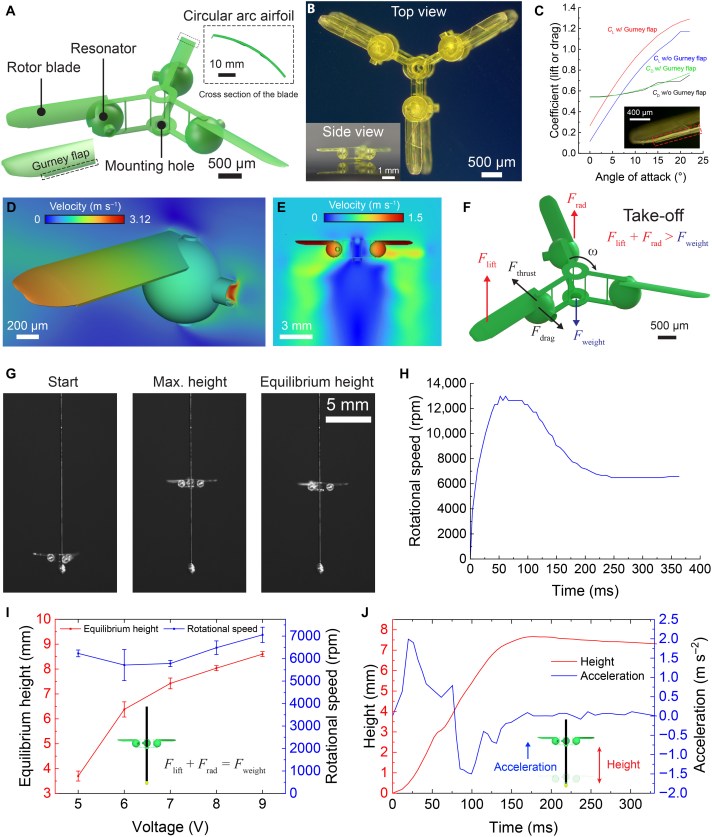
Even if you don’t want to read the full scientific paper, you should at least watch the supplemental videos Hwang et al. include. Propelled by an external audio source, these robots are capable of navigating on water and, more impressively, flying in two different modes: from aerodynamic lift generated by rotation induced by the acoustic source, and from pure acoustic “thrust.” It’s a clever bit of engineering and a neat demonstration of the principle. Part of why the robots can be made so small is because their actuating energy is coming from an external source; it would be interesting to explore the possibility of incorporating the acoustic source into the robot itself.
Read more here: Acoustic resonators as wireless actuators in air for small-scale robots | Science Advances
Ceramic Piezoelectric Devices
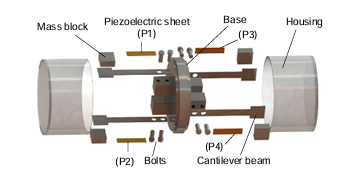
Piezoelectricity is one of those concepts that is both ubiquitous and, to me at least, endlessly fascinating. I’ve conducted several experiments involving piezoelectric materials, and piezoelectric sensors often appear in things I design (including the high temperature 3D printer modifications I’m working on). I doubt I’ll be able to get my hands on the Sm-doped Pb(In1/2Nb1/2)O3-Pb(Sc1/2Nb1/2)O3-PbTiO3 textured ceramic piezoelectrics to incorporate into a project any time soon, but the development is nonetheless interesting, and the methods the team used are worth exploring.
Read more here: Overcoming the performance ceiling of textured piezoelectric ceramics | Science
Weather Forecast in Space
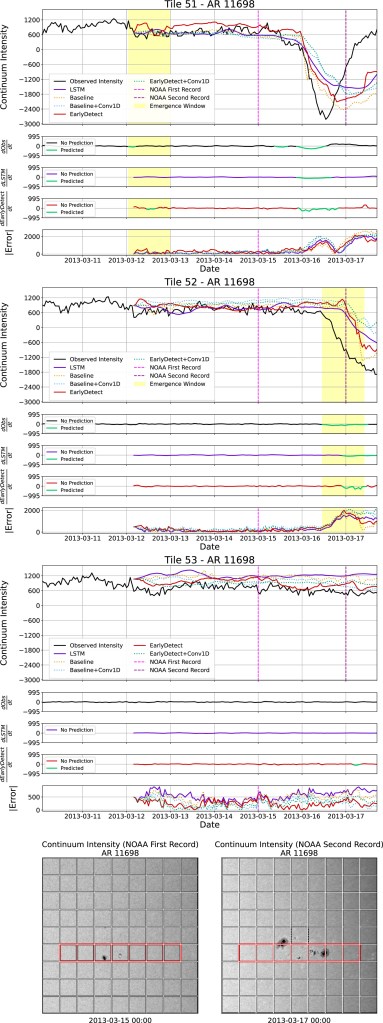
Space weather forecasting is problematic. We can capture the long-term trends and cycles, and we’ve improved our observations to be able to provide warning for certain types of solar weather events, but only those which move slower than the speed of light, and actually predicting any individual event remains elusive. Tirona et al. here describe a machine learning technique to examine precursor signals associated with potential solar flares based on solar active region emergence. The approach apparently predicts the formation of solar active regions some nine hours in advance, which is a major step forward and a testament to the power of more robust statistical tools.
Read more here: Forecasting Continuum Intensity for Solar Active Region Emergence Prediction Using Transformers – Tirona – 2026 – Journal of Geophysical Research: Machine Learning and Computation – Wiley Online Library
That’s all for this week. If you have questions or have a subject you’d like me to cover in more depth, let me know in the comments.


2 thoughts on “Ideas and Innovations Newsletter – 202608.15”