
While I try to read broadly to keep abreast of advancements in multiple fields relating to science and technology, I most closely track advancements in my own profession, and this week is ample evidence of that, with just four articles to feature and all of them pertaining to space in some way (though the one on dark matter is arguably more physics than space). A couple of them are more operationally focused, looking at the Roman telescope launch and a NASA contract announcement for Martian communication infrastructure. As for the paper on dark matter, I’ll admit that it’s a pretty dense one. I can’t claim I perfectly understood everything it attempts to discuss, but fortunately there are several news articles which go into a less highly technical level of detail and manage to explain the finding in more approachable terms.

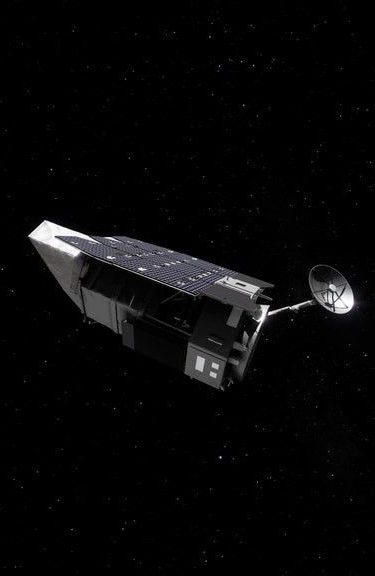
Roman Space Telescope Launch
You know I’m not going to skip a nuclear fusion update. In this case, it’s a news article from Nature exploring Pacific Fusion’s progress on their fusion reactor, which aims to achieve net facility gain. Unlike a lot of recent fusion startups, this one has a fairly conservative approach in that it has a business model – simulation, modeling, and testing in partnership with national labs – that is not wholly dependent on successfully cracking the fusion energy problem which has been about thirty years off for the past eighty years.
Read more here: Roman Commissioning – NASA Science

Lopsided Mars
A few weeks ago, this newsletter featured a paper about possible inconsistencies in Earth’s mantle detected using neutrino measurements. We don’t have massive neutrino detectors on the surface of Mars, but we do have measurements from the Mars Global Surveyor, Mars Odyssey, Mars Reconnaissance Orbiter, and the InSight lander, and we know the surface terrain and the planet’s crust is notably asymmetric. This paper from Berne et al. explores evidence for and impacts of a thermal anomaly which could help explain the observed asymmetries.
Read more here: Tidal tomography reveals a thermal anomaly beneath Mars’s crustal dichotomy | Nature
Finally, a WIMP?
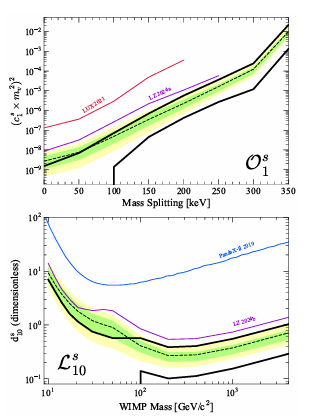
Dark matter and dark energy remain pernicious mysteries in our understanding of the universe, and every time we think we’re surely on the path to understanding it, or to detecting it, or to confirming anything about its existence, we seem to find new evidence to the contrary. A new paper from the team behind the LUX-ZEPLIN detector claims to present evidence for a single event which may correspond to a WIMP particle (weakly interacting massive particles, one of the candidates for dark matter particles which has gone in and out of favor over the last decade or two), although if so its properties are even stranger than we expected.
Read more here: LZ_Preprint_260901_Dark_Matter_EFT_Nuclear_Recoil_Search_at_Higher_Energies.pdf
Martian Infrastructure
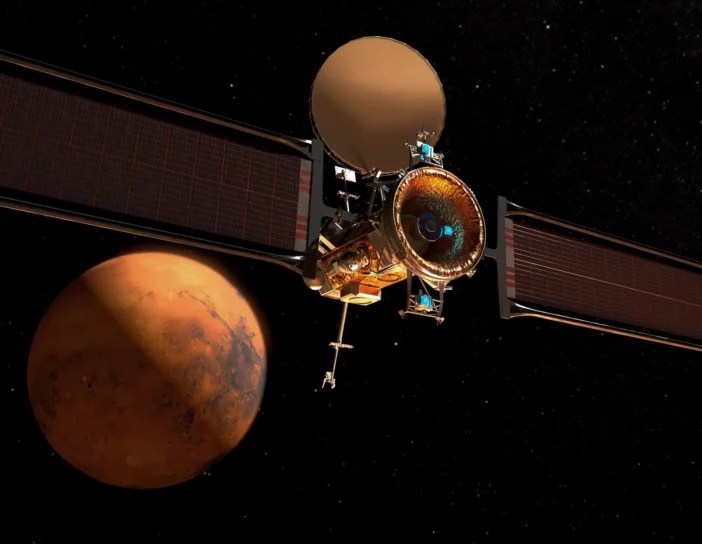
The title of this one pretty much says it all, but I’ll offer this: if this mission makes it to launch without accumulating a suite of scientific instruments and science objectives to complete in addition to its ostensibly core infrastructure role, it will mark a first for humanity’s interplanetary efforts. Deploying dedicated infrastructure to support our deep space endeavors is a necessary and (to me) exciting step, but it is not a glamorous one, and similar proposals have ended up becoming science missions with an infrastructure secondary mission. It’s hard to resist the urge to put some scientific instruments on something occupying one of our relatively rare and expensive opportunities to travel to Mars, especially since doing so helps justify that expense. However, it complicated the design, can detract from the infrastructure mission, and usually leads to delays and cost overruns.
Read more here: NASA Selects Blue Origin as Mars Telecommunications Network Provider – NASA
That’s all for this week. If you have questions or have a subject you’d like me to cover in more depth, let me know in the comments.


One thought on “Ideas and Innovations Newsletter – 202609.05”