
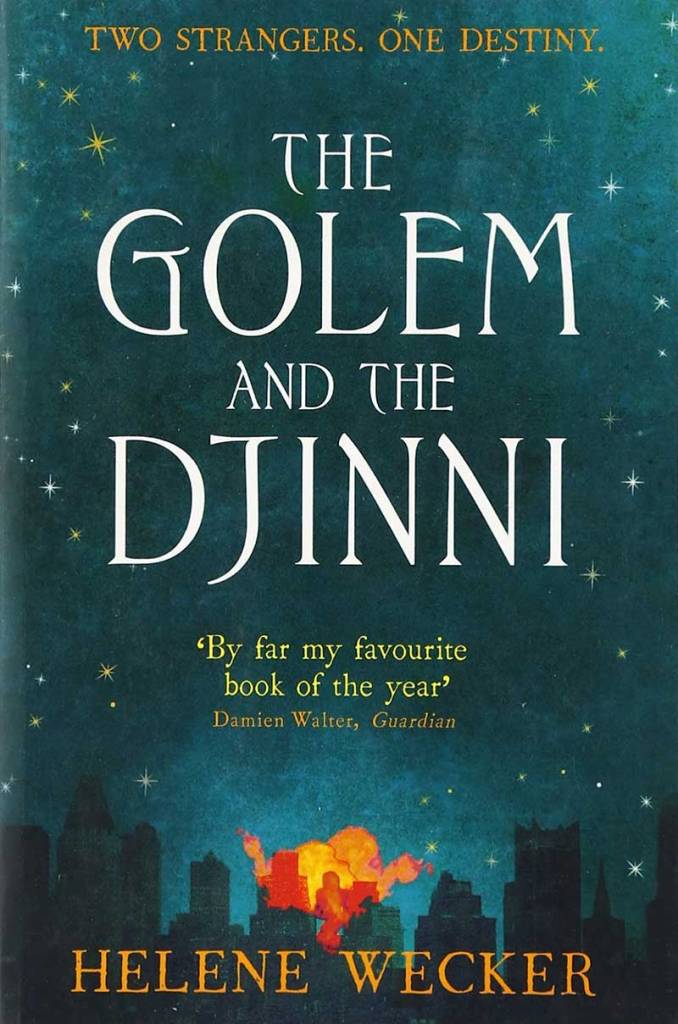
My main problem with urban fantasy is how the magic is integrated into the world – or rather, how it is not integrated. Most stories in the genre keep the magic separate, hidden behind increasingly torturous veils of secrecy to prevent its effects from permeating the world beyond what the author intends for a particular plot. That’s fine if it’s the story you want to tell, but my reading of the myths and fables from which the fantasy genre arose predisposes me to prefer a more integrated approach, where the magic is part of the world, even if it’s ostensibly the “real,” “normal” world. Doing that well, considering all the ramifications and consequences and implications, becomes more difficult the closer to the modern era your worldbuilding takes you, because once you get to a certain point, there’s a sense that science and engineering should have plumbed the magic for its secrets and built it into systems and explanations, which robs it a bit of being, well, magic.
The setting for The Golem and the Djinni isn’t quite to that point, lingering in late nineteenth century America. There is still enough mystery in the world and peoples’ understanding of it for a story like this to work without needing to tread into science fiction and start trying to offer explanations for the mysteries. We can simply accept that the djinni are a species that exists but prefers not to interact with humans (and those interactions often aren’t recognized as such, in part because of diminished superstition). The golem is a bit harder, mostly because we only have one example. There are a few mentions and allusions to other golems, but of such a lower level of complexity and sophistication that even the constant refrains about Chava’s uniqueness can’t make her entirely believable. If you can look past that to accept the story on its terms, though, it rarely becomes distracting or impactful to the plot.
Told from a third person omniscient perspective, Wecker deploys an unornamented prose style which delivers the story in a matter-of-fact fashion which puts the focus on the events and the plot. Although I personally would favor slightly more elaborate and evocative descriptions, the advantage of this approach, which does not give us deep introspectives in each character, is how it gives the reader wide latitude to imagine the characters’ experiences at will, a welcome change compared to some recent novels which lean on the didactic side and try to control every aspect of the reading experience and the reader’s perception of the story. Although we learn the golem’s story from its inception, the djinni’s story is told with a partial amnesia plot, wherein the djinni lost his memory of how he came to be imprisoned. Wecker tells a parallel story of the djinni’s path to capture, which is executed well and comes to a satisfying climax, save for it being slightly unclear throughout the book whether the djinni in the present is remembering the scenes as the reader is receiving them, or if he remains mostly ignorant until the revelation towards the end of the book. Unfortunately, the other half of the revelation in the climax of the djinni’s subplot is not foreshadowed as effectively, and the climactic conflict is somewhat discordant with the tone of the rest of the book.
Both the golem and the djinni live in religious immigrant communities, disguising their true natures. Wecker tells us the communities are religious, but it is not shown or demonstrated, and most of the major characters are not. This is a missed opportunity to explore religion and belief, especially in Chava’s case, and it seems like a bit of an evasion for most of the major characters in both protagonists’ lives to be irreligious while immersed in deeply religious communities. The djinni’s atheism makes sense for his character, but everything about the golem’s creation and personality suggest she would want to engage with the religious practices and beliefs of her companions. Including a more intimate look at some of the rituals around which these communities build their lives and rhythms would also help to bring more of the story’s world to life. It makes sense that the golem and the djinni would be the focus in a book called The Golem and the Djinni, but there is a certain two-dimensional quality to the world they inhabit, like the other characters the two encounter are actors playing roles in the book.
Despite that, this makes for a delightful read. It’s quiet and thoughtful without being heavy, the magic is subtle and understated, and the two protagonists are thoroughly rendered and deeply explored. There are plenty of djinni stories, and plenty of golem stories, but this one manages to do something unique and interesting with both those commonplace fantasy beings, and not just in terms of the nineteenth century New York setting. Nor is it the story I sort of expected it to be, with the golem and the djinni encountering each other throughout different periods, a bit like Crowley and Aziraphale in Good Omens; it is tighter and more temporally contained than that, and the contrast between the djinni’s and the golem’s perspectives manages to convey both what is uniquely them and what is intrinsic to their respective natures in Wecker’s conception. The djinni’s alien nature comes through particularly well without making him unrelatable.
You could probably read all kinds of things into this story, like the experience of being an immigrant who doesn’t fit with the community, the reactions of humans to things they don’t understand, the disturbance of the uncanny valley, even the difference between faith and mysticism. Wecker helpfully doesn’t seek to bind the story rhetorically to a given message or meaning, letting us readers approach the story as it is and take away from it what we will. The Golem and the Djinni is a pleasant read, not too heavy, but still with enough to it to keep you thinking, and that places it pretty highly by my reckoning.

