
Here’s another full week of innovations for you. Some of these you might have already seen in headlines, like the coldest temperature record achieved on the Chinese space station, but we’re also looking at everything from the composition of so-called “empty” space to the history of language development.

Catching up on Spider Silk
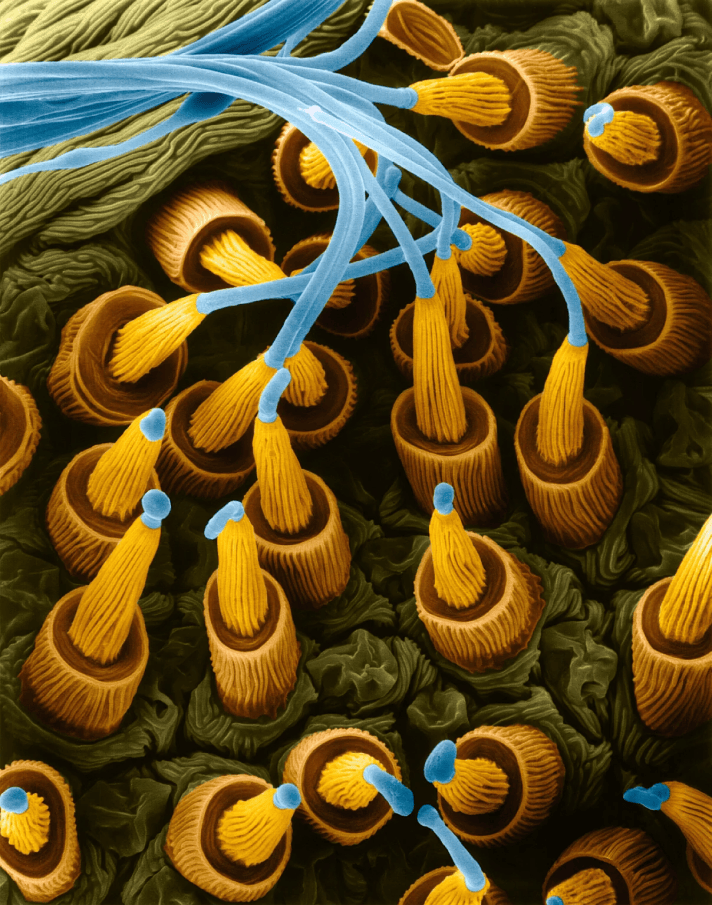
Bioinspired engineering has a long history, from dreams of flight like the birds to ways to cling to surfaces like geckos. Using biological materials directly, or cultivating them, has an even longer history, but spider silk defies cultivation (the spiders tend to eat each other, amongst other reasons), and mimicking its properties has proven elusive. This article looks at recent advances made in understanding how spider silk is formed, which could lead us eventually to manufacturing the substance, or substances like it, for ourselves. If successful, the applications are innumerable.
Read more here: How Spiders Spin ‘Silk Dope’ Into Nature’s Toughest Material | Quanta Magazine
Not so Empty?
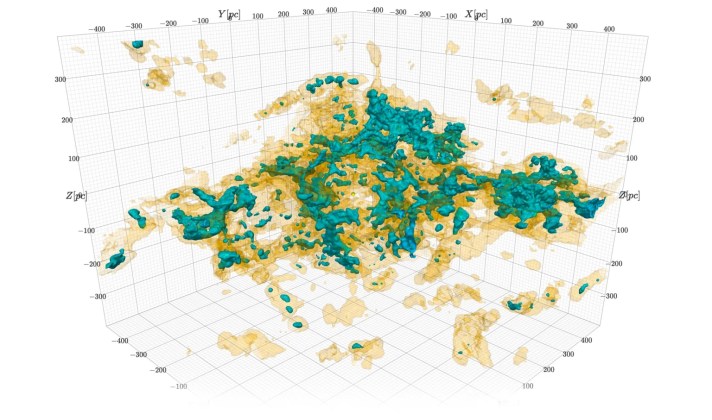
I once read there is an average of six hydrogen atoms per cubic meter in the universe. Before you go thinking that means you’re likely to run into six hydrogen atoms in interstellar space, recall that is an average which includes places with significantly more than six hydrogen atoms per cubic meter, like planets, stars, and black holes. Now, this article posits a higher number, so perhaps that six atoms figure is out of date. More interesting is what it, and the paper it is based on, have to say about the energy in the interstellar medium. This is not fanciful-sounding zero-point energy or mysterious quantum foam at the Planck scale. It’s traditional, detectable electromagnetic radiation, and it has some fascinating implications for our understanding of galaxies and star formation.
Read more here: A New Map of ‘Empty’ Space Challenges a Tranquil Picture of the Galaxy | Quanta Magazine
Electric Concentration
Years ago, I read a paper which claimed that chess grandmasters can burn as many calories during a competition match as marathon runners burn during a race, just by the amount of mental effort they’re exerting. The exact figures have since been disproven, but mental exertion and resultant fatigue is a familiar feeling to most of us, and I’ve certainly done mental exercise which left me feeling as wrung out and hungry as a marathon (the class was called engineering math, the final was three question, I had four hours, I didn’t finish, I got below a seventy percent and was about in line with the rest of the class, and I was sweaty, bleary, and hungry when I stumbled out of the classroom). This paper explores the mechanisms of mental fatigue. As a side effect, it describes a rather interesting brain stimulation technique which can create a state of profound concentration at the cost of later mental fatigue. If that could be harnessed, I could see it being quite useful.
Read more here: A causal account of the neural origins of mental fatigue | PNAS
Dust: Problem for Furniture and Mars Rovers
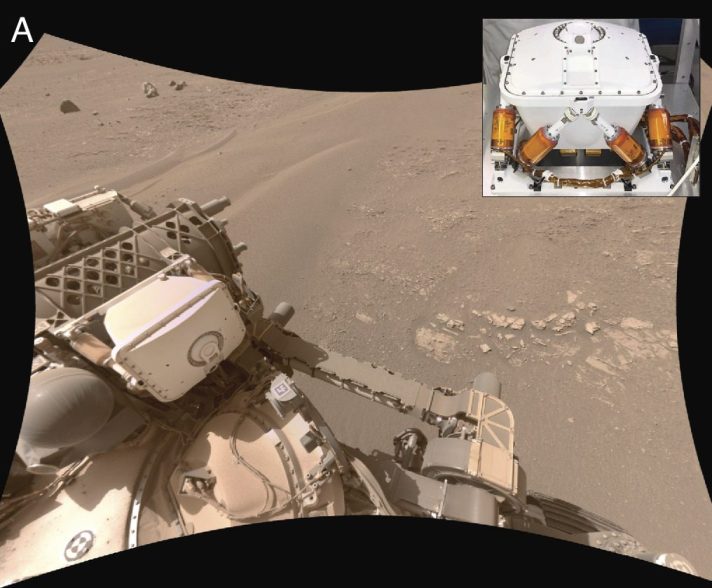
Dust is an irritant far beyond its tendency to accumulate on the surfaces of furniture in your house. It is a major planning factor in manned and unmanned exploration of other celestial bodies, including the Moon and Mars. Dust accumulation on solar panels of Martian vehicles has ended the life of several rovers, and the sharp, electrostatically charged dust on the lunar surface was a significant challenge for the Apollo missions. Dust mitigation for lunar missions is an entire field of study, but much less is known about the properties of Martian dust. This paper takes advantage of an accidental opportunity to learn more about the properties of fine Martian dust and examines how those properties might impact both manned and unmanned missions.
Read more here: Fine and ultrafine Martian dust presents additional risks for future crewed missions to Mars | PNAS
Electrifying Toothbrush
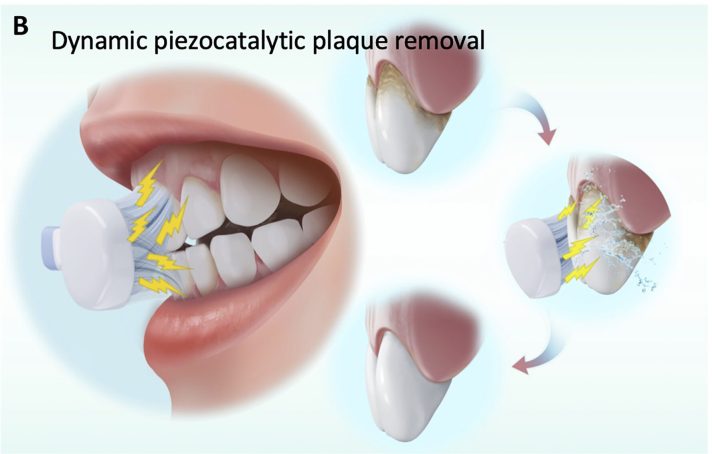
When you think of innovation, you probably think of high technology, industries like computers, aerospace, semiconductors, biochemistry. Innovations can be made anywhere, though, and the authors of this paper set out to innovate on a ubiquitous household product which most of us probably prefer not to think about any more than necessary: the toothbrush. Theirs doesn’t just brush – it uses piezoelectricity and reactive oxygen species to produce an actively antibacterial environment on the surface of your teeth. Of course, making something that works better than the current form is only the first step. It’s a long way from being a practical consumer device.
Read more here: Self-charged toothbrush facilitates tooth healthcare maintenance | Science Advances
New Glenn, New Capabilities
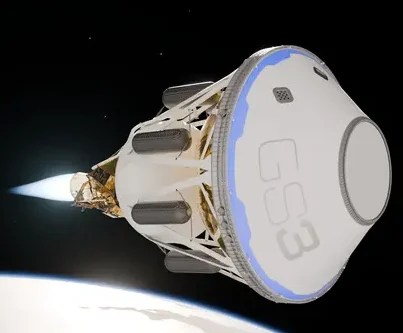
Blue Origin made a pair of announcements this week about innovations intended to increase the capability of its New Glenn launch vehicle. Northstar is a new rocket engine, which is always good to see, but its announcement of a third stage for its heavy lift rocket has more immediate and far-reaching implications – literally, in that it enables the vehicle to directly reach orbits with larger masses than it could in previous configurations.
Read more here: New Glenn Expands Its Reach with GS3: Heavy-Lift Performance Direct to GEO and Beyond | Blue Origin and Introducing Northstar: A New Booster Engine with More Thrust and Less Mass | Blue Origin
Space Got Colder
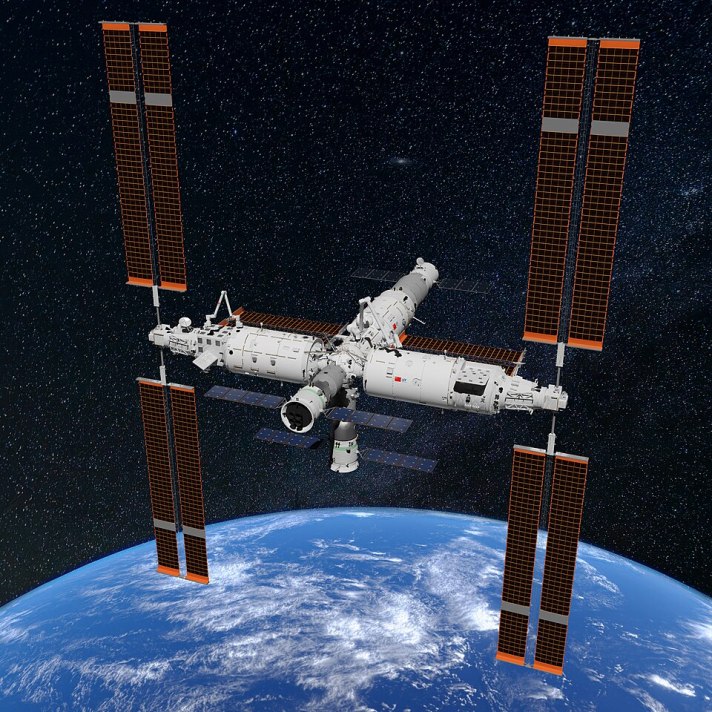
Weird things happen at extremes, and with physical extremes in particular those weird things are often opportunities to observe the kinds of quantum effects and interactions which are usually obscured in the day-to-day macroscopic world. On the Chinese space station, scientists achieved the coldest temperature ever, just 9.7 picokelvin. Extremely low temperatures aren’t just a physics gimmick, as they can enable advanced in precision measurement because there is so much less thermal noise in such a system.
Read more here: Quantum gases below 10 picokelvin in space | Science
Linguistic History
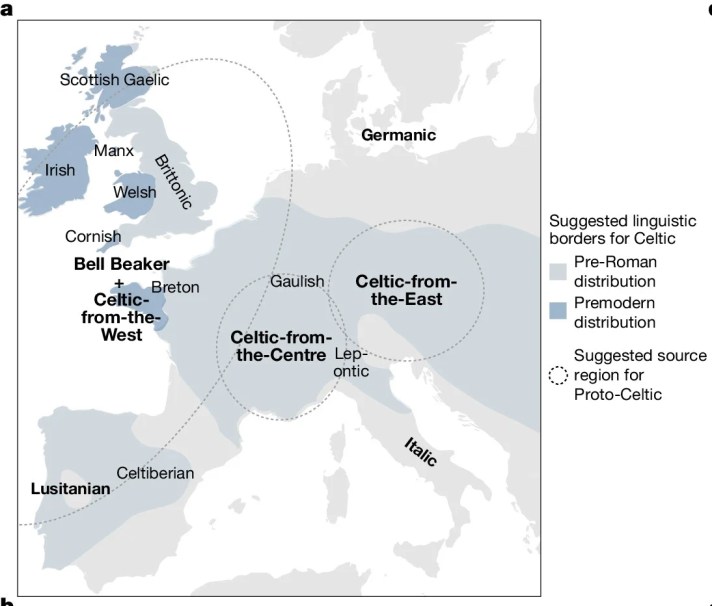
If, like me, you’ve been enjoying the History of English podcast, you will doubtless find this pair of papers interesting, too. The titles are quite descriptive of their contents. Both go into depth about the Indo-European language family, how it diversified, and offer insight into why certain descendent languages flourished in certain regions as opposed to others. They even attempt to answer some of why Germanic languages spread more broadly and exerted greater influence on modern languages than Celtic ones.
Read more here: Tracing the spread of Celtic languages using ancient genomics | Nature and Tracing the spread of Germanic languages using ancient genomics | Nature
That’s all for this week. If you have questions or have a subject you’d like me to cover in more depth, let me know in the comments.

