
As promised, you get a longer newsletter this week, offsetting last week’s rather sparse edition. Across eight articles, this week we’re exploring a model of haze in Venus’ atmosphere, a planet formed from the corpses of its immediate ancestors (or should we call it a phoenix planet?), an improved brain-computer interface, a way of preserving quantum effects utilizing entanglement, a particularly interesting robotic textile, an improved battery chemistry developed with the application of artificial intelligence tools (an appropriate use, for once), a plastic, 3D printed filter for microplastics, and the public release of the data from NASA’s Artemis II mission.

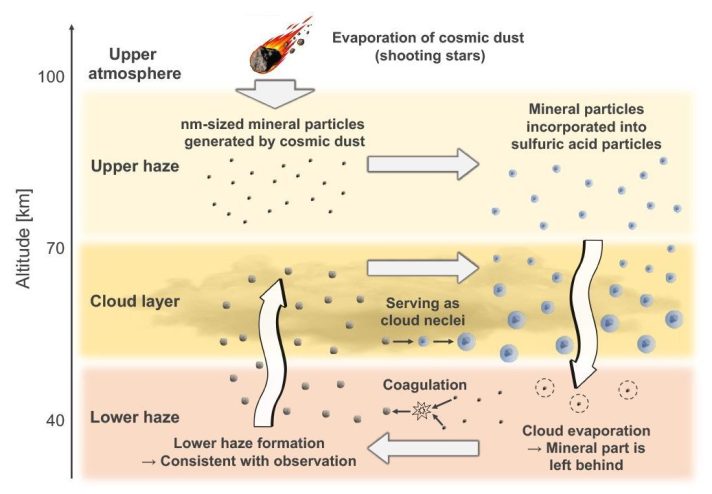
Cloudy? Blame Space Dust.
Most of the headlines referring to this paper, and the paper’s abstract, claim the authors “establish[ed] cosmic dust as an essential component of Venus’ climate.” This is overstating the matter, since what they actually did was use a microphysical model to test different haze formation conditions until they identified one which matched the data and observations available for Venus’ lower atmosphere. This is common practice, since it’s very difficult to perform experiments or collect more data on these sorts of questions, but model alignment does not a definitive answer imply. It would be better to claim, as the paper title does, the identification of “A cosmic origin of Venus’ lower haze.”
Read more here: A cosmic origin of Venus’ lower haze | Nature Astronomy
Planet Phoenix
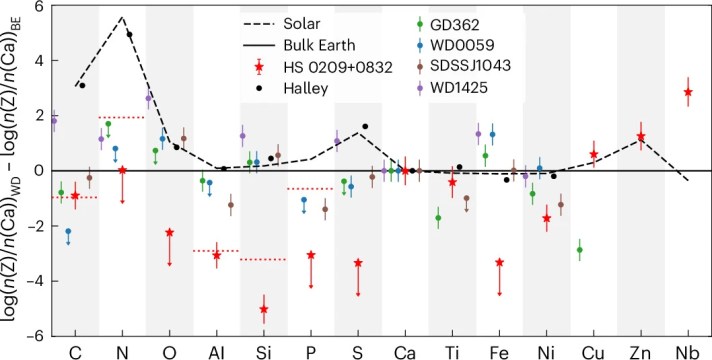
This is not “high impact” or research that has fascinating implications and spin-offs; it’s simply interesting in itself. Williams et al. report the potential discovery of what they term a “second generation” planet – that is, a planet formed from the debris of a stellar explosion around the white dwarf star. In other words, a star died, blew off a bunch of its material into its surrounding solar system, and then that material coalesced into a new planet in orbit of the star’s corpse. It tells us more about the evolution of planetary systems, and it’s simply interesting on its own.
Read more here: Discovery of a second-generation planet candidate accreting onto a white dwarf | Nature Astronomy
Hirsute Telepathy
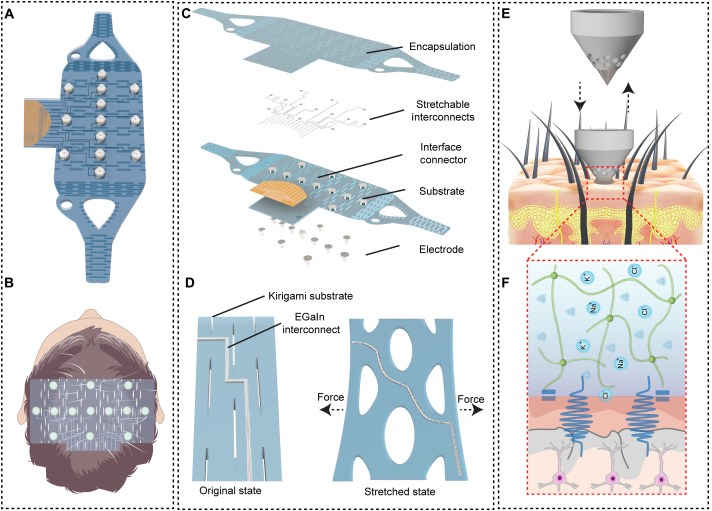
Numerous problems and concerns arise from the successful implementation of brain-computer interfaces, but the technology’s utility is also attractive for many purposes, and not just to replicate the kinds of computer control seen in certain science fiction pieces. Practical difficulties have kept the technology from proliferating, despite many of the “hard” problems involved already being solved – that is, we can record and interpret brain activity, but we can’t do it without invasive sensors. This paper describes a particular brain-computer interface which is flexible and works through a user’s hair, making it significantly more approachable than most previous implementations.
Read more here: Highly stretchable, hair-compatible multichannel neural interface with time-stable hydrogel for high-fidelity long-term EEG sensing | Science Advances
Stable Entanglement
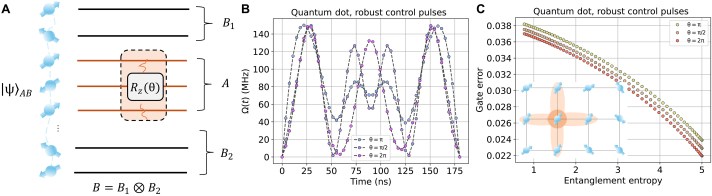
We hear a lot about quantum technologies, and while sometimes this is simply to deploy the word “quantum” as a buzzword, there are legitimate applications of quantum physics to enable some pretty extraordinary technological feats. Unfortunately, scaling quantum effects is notoriously tricky, since quantum phenomena tend to disappear except under carefully controlled conditions (usually involving exceptionally low temperatures, high caliber vacuums, etc.). This has been true of practical quantum computers for several years now, with the basic problems solved in several ways, but the scaling problem remaining a challenge. This paper from Feng et al. looks to use the quantum effect known as entanglement to help preserve the quantum effect through scaling, which makes a lot of sense once you think about it, but the actual implementation is another matter entirely.
Read more here: Entanglement-induced resilience of quantum dynamics | Science Advances
The Material is the Robot
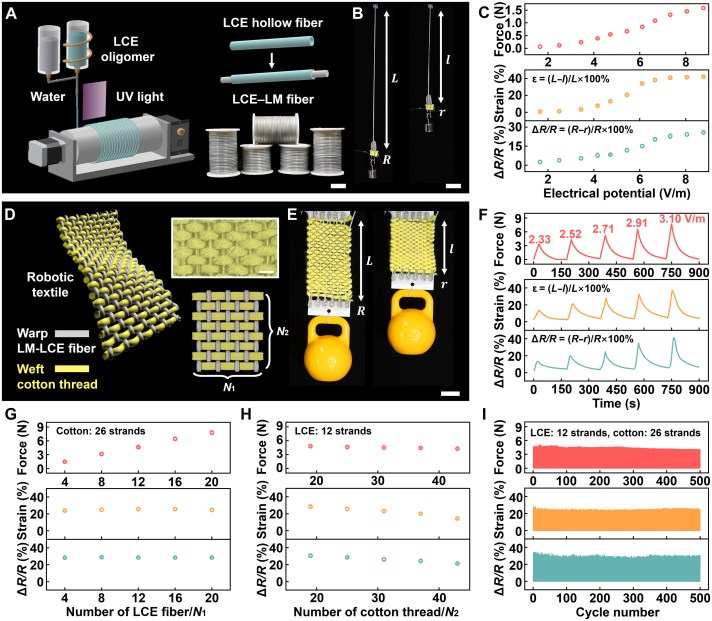
When people tell me they don’t know what they want to do for work or study in school, I tell them to pursue materials science. Well, not all of them – I know the field isn’t for everyone – but the point is that materials science is one of the most enabling areas of development, especially since the start of the Space Age. New alloys, novel molecules, clever crystallizations, even unique materials that can be developed only in microgravity environments. Then there are metamaterials, which open up entirely new and dynamic material properties. The robotic textile described in this paper is a prime example of the kinds of capabilities which can now be incorporated into the substance of a thing, rather than arising from the thing’s overall function. This is one where I’d suggest you watch the supplementary videos, too.
Read more here: Programmable robotic textile with closed-loop self-sensing and active actuation | Science Advances
Another new battery, and an appropriate use of AI
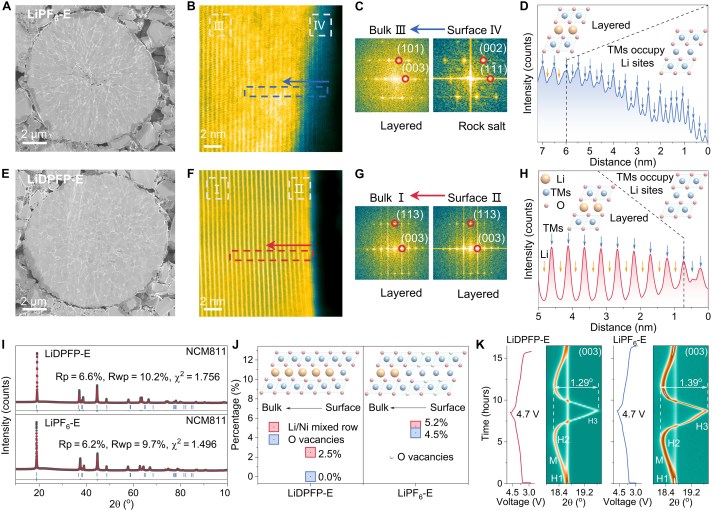
Frankly, if I highlighted every interesting advance in battery technology I came across, these newsletters would be a dozen articles long every week, and most of them would be about batteries. There is an immense amount of innovation happening in this space, with different chemistries, variations, physical formations, and other parameters being considered, altered, and manipulated in a bid to improve our ability to store electrical energy in a ready form for a wide array of applications. I’m choosing to highlight this one because I think it’s a great example of using artificial intelligence/machine learning tools for a task to which they are ideally suited: iterating through possible battery formulations to find the ones most worth developing and testing further.
Read more here: Intramolecular charge redistribution of phosphate anions enabling ultrahigh-voltage lithium metal battery of 600 Wh kg−1 | Science Advances
Beat Microplastics with Bigger Plastics
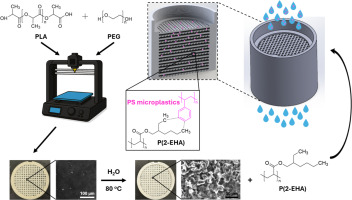
Writing or researching about microplastics seems like an easy way to grab headlines these days (like the paper about black plastic utensils which generated a huge amount of attention, and then continued to do so even after the methodology, results, and funding sources were all called into question). This one might be an exception, since it’s not all doom and gloom (remember, apocalypses sell good advertisements). Instead of telling us how terrible the world is and how pervasive microplastics are going to kill us all, Crawford and Mekonnen have a solution. Worse (from a media attention standpoint), it’s a cheap, broadly deployable solution which also uses plastic. If you’re worried about microplastics in your water supply, you just might be able to 3D print an effective filter.
Read more here: 3D-printed, flow-through water filters for microplastic capture: The effect of surface porosity, column height, and pressure-sensitive adhesives on removal efficiency – ScienceDirect
Artemis II Data Released
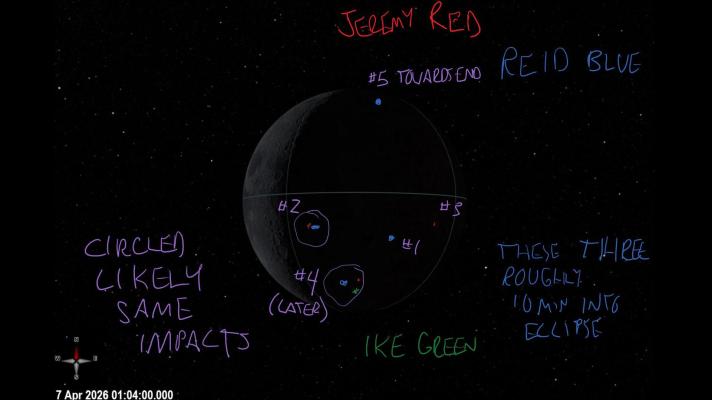
Did you know most NASA data is available to the public? You might have to make an account to access some of it, but you don’t have to be a scientist, researcher, or government employee to access, download, and utilize all the data generated by NASA space probes, rovers, test chambers, and manned missions. It’s a hugely valuable and sometimes underutilized resource. Now, that trove includes the data and images from the Artemis II mission earlier this year. They also include a preliminary report, an operations report, and a data users guide.
Read more here: NASA Releases Artemis II Lunar Science Data, Images – NASA
That’s all for this week. If you have questions or have a subject you’d like me to cover in more depth, let me know in the comments.

