
The hardest part about maintaining this newsletter is not finding enough articles to share; it’s choosing which ones not to share. Oh, there are quieter weeks, but many weeks what you get on Saturday is downselected from well over a dozen papers and articles I come across I think you might find interesting over the course of the week. It goes to show there really is always more to learn.

Made in Space
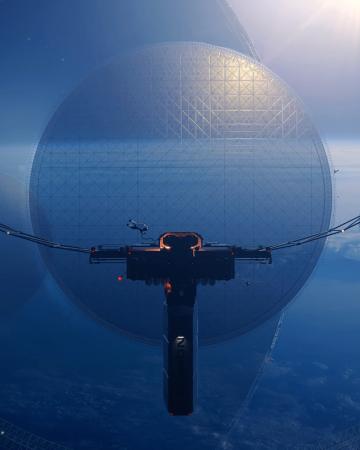
Considering the constraints and conditions associated with space launch, assembling structures in space seems like a logical decision, but there have been few examples to date, especially of in-space assembling occurring without astronaut assistance. Complex deployables are far more common, from booms to antennas to sunshades, despite the engineering challenges associated with reliable mechanisms for spacecraft. Perhaps DARPA’s NOM4D demonstration will finally bring what has mostly been science fiction into reality.
Read more here: NOM4D program demonstrates automated in-space assembly | DARPA
Copying the Space Station
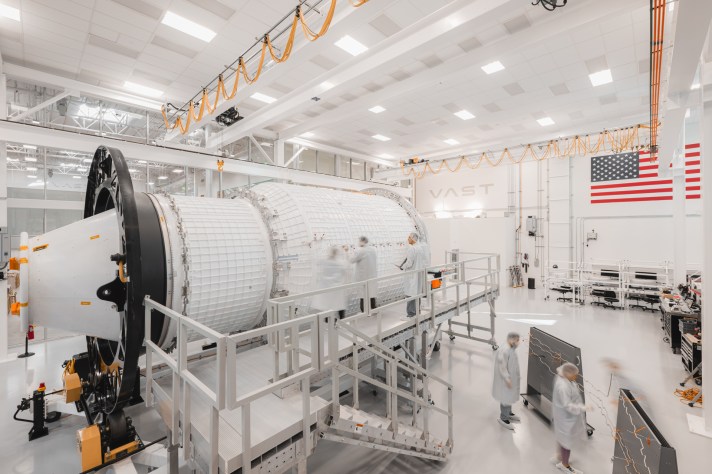
Remember when we were all going to be vacationing in microgravity in the 2030s (and there were going to be astronauts on Mars, colonies on the Moon, nuclear fusion would supply limitless clean energy for the world…) in luxurious space hotels? Somehow, those ideas have shrunk into vaguely “commercial” space stations which NASA is funding private companies to develop and operate as successors to the ISS. That context makes it all the more disheartening to read about the latest drama around the effort, with Axiom alleging Vast (two of the most prominent companies involved in the commercial space station effort) incorporated Axiom’s work for their own proposal. This is not encouraging for the development and launch of a viable ISS replacement in the near future.
Read more here: One space station company sues another for copying its work – Ars Technica
Mars Sample Return Returns?
I really couldn’t fault the decision to cancel the original MSR program – the architecture was convoluted, it was behind schedule and over budget, many aspects of it remained unproved, and at times it seemed we would land people on Mars before MSR retrieved Perseverance’s samples. However, I would still be thrilled to see those samples retrieved, so I’m interested to see what comes of the new Perseverance Sample Retrieval Architecture (PSRA) announced November 9th.
Read more here: NASA kick-starts a fresh push to bring Mars samples home | Space

Weird Magnetic Fields
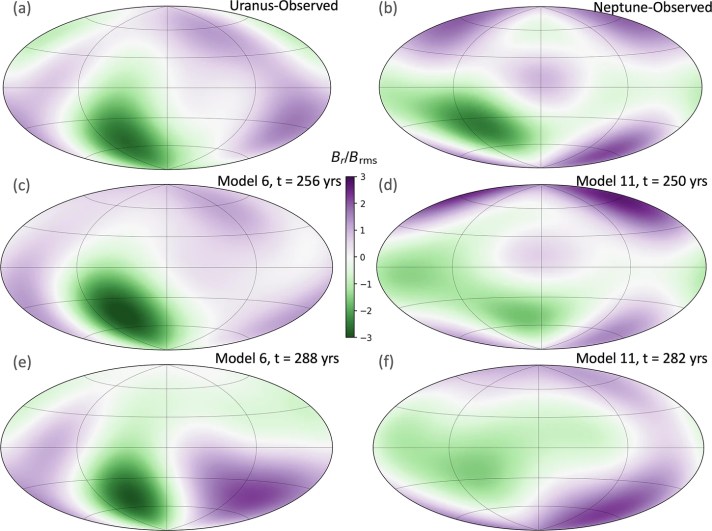
Despite no spacecraft visiting them since Voyager 2, scientists continue to try to better understand our solar system’s two “ice giants,” which by exoplanet standards may be neither icy nor particularly giant. Here, Yan et al. use numerical methods of create models that better reflect the weirdness of Uranus’ and Neptune’s magnetic fields, which are a bit strange. Well, almost everything about Uranus is strange compared to the other planets in the solar system. This is mainly a modeling study, where the authors create a mathematical model and see if it better fits the available data.
Read more here: Electrical conductivity structure drives anomalous and potentially time-varying magnetic fields at Uranus and Neptune | Communications Physics
First Euclid Data Release
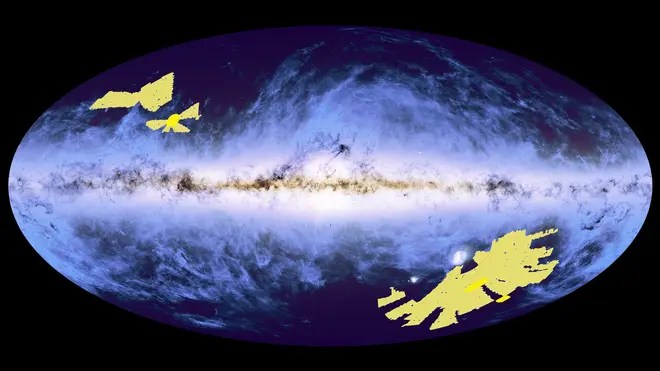
I never get tired of the fact that space agencies like NASA and ESA make so much of the data their instruments generate available to the public. That anyone can, with a few clicks, a bit of typing, and an internet connection, gain access to high-quality scientific data generated by some of the most advanced scientific systems on and off the planet, is simply amazing. This week, ESA published the first batch of data from the Euclid space telescope, which is primarily pitched as looking for dark matter, but I have no doubt the data will enable insights into far more.
Read more here: Euclid lays the foundation for its best-ever 3D map of the Universe
Expanding VPP
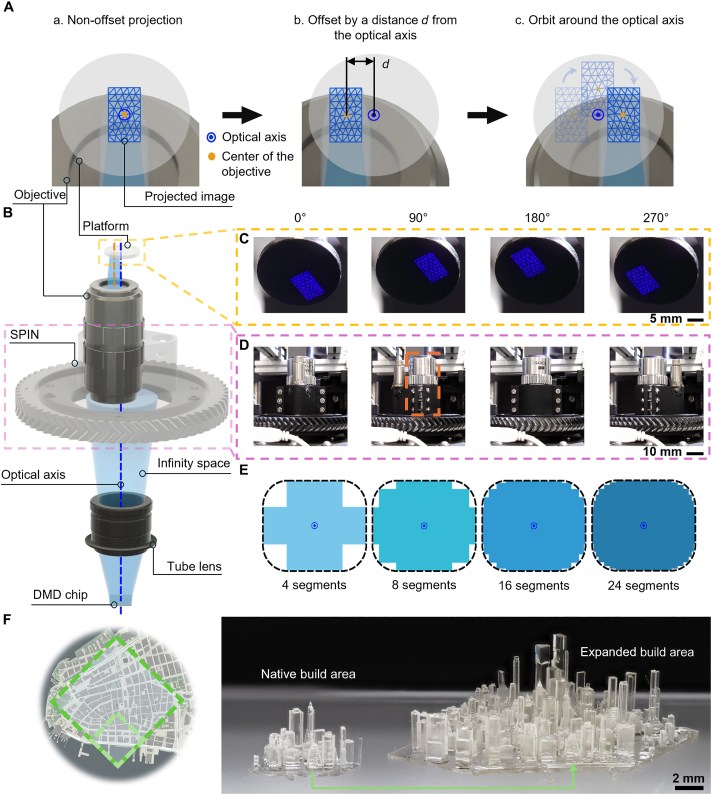
Vat photopolymerization has really taken off recently. The technique isn’t new, but it has expanded significantly in both capability and accessibility. I wouldn’t be terribly surprised if these types of machines because almost as common as FDM printers, and papers like this one continue to push their capabilities. In the early days of consumer 3D printers, there was talk of one in every home, which doesn’t seem realistic, but I heard the technology compared to drill presses recently and thought it a good one. Not everyone has a drill press, but you’re not surprised if your handy neighbor has one in the garage. The same is true for an increasing variety of additive manufacturing machines.
Read more here: Segmented projection image translation for large-area, high-resolution vat photopolymerization | Science Advances
Signals Analysis in the Blind
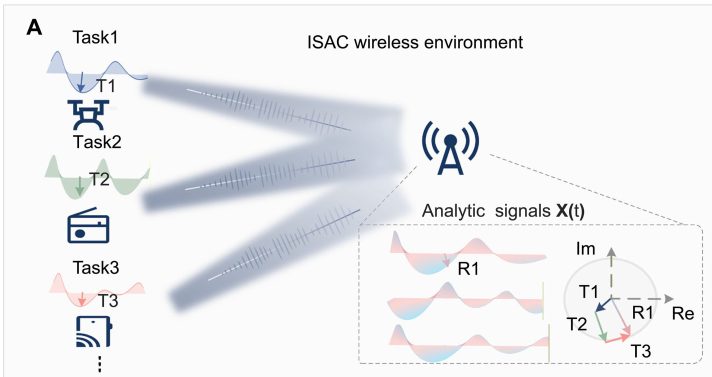
The world of RF is deep and mysterious, even by the standards of space-adjacent disciplines. Despite spending a portion of my career working in SATCOM, I can only claim to dabble in RF’s intricacies. In other words, take a deep breath before you read this paper, because it’s dense, esoteric, and it’ll probably take some time just to get through the abstract. I include it because the capability it’s describing is likely to be extremely relevant to all of us in a few years. I worked with a machine learning model a few years ago that did something similar, but it was only able to address stored spectrum data, not perform the analysis in real time.
Read more here: Real-time complex-valued RF blind source separation via in-physics computing | Science Advances
Better Imaging, because Quantum
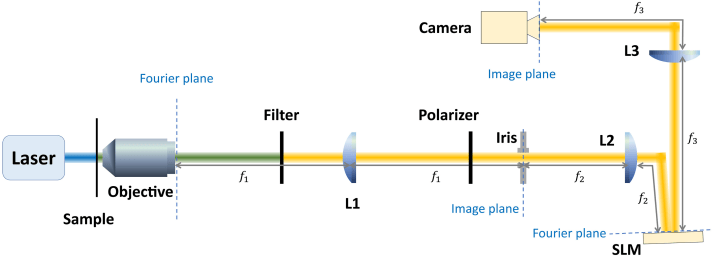
You might have learned in a high school physics class about the resolution limitations associated with the wavelength of the light involved, diffraction gradients, focal distances, and other factors of classical optics. Turns out that’s not the case. Why? Quantum. But this isn’t just quantum being deployed as a buzzword. The team behind this paper describe a custom Fourier domain division scheme which reduced noise through optical preprocessing of incoming photons. The result, they claim, is “superresolution imaging” for “practical image analysis.”
Read more here: Passive imaging with quantum advantage | Science Advances
Printing Photonic Crystals
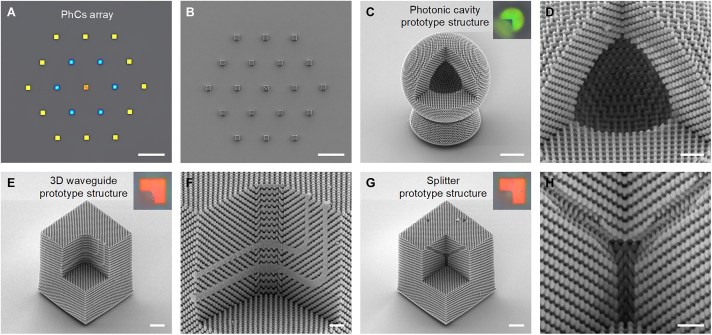
Here’s a second paper involving additive manufacturing, but this one is about its application, not a development in the field. The authors describe using suspended pyrolysis-assisted two-photon polymerization (obviously – wouldn’t you?) to create custom, visible spectrum, three-dimensional photonic crystals suitable for optical waveguides, splitters, and micro-optical systems.
Read more here: Controllable fabrication of visible-spectrum 3D photonic crystals | Science Advances
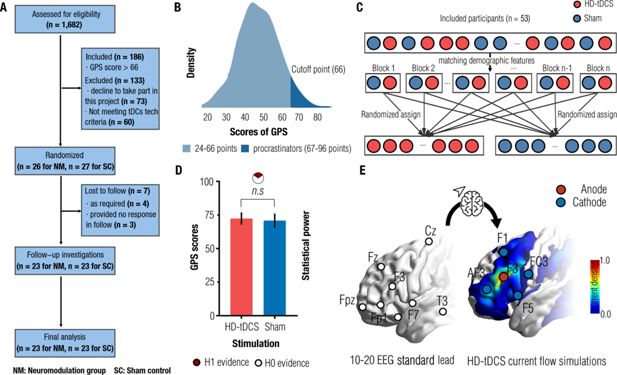
Shocking Procrastinators – it only sounds Pavlovian
My tendency is usually to be proactive, but everyone procrastinates sometimes, and I started procrastinating more as I got older, mostly because of the number of times my proactivity has been punished. Well, not directly punished, but the work I did in advance was obviated by later developments, so I ended up doing more work than if I’d put the project off for later. In other words, procrastination isn’t necessarily a problem in all circumstances. However, if you do find yourself procrastinating a bit too often, this paper suggests shocking your left dorsolateral prefrontal cortex with direct current. It seems to be part of an increasing trend of using electrical stimulation of different brain regions to achieve particular effects; there are absolutely some science fiction story ideas to be had with this kind of technology.
Read more here: Modulating task-outcome value to mitigate real-world procrastination via noninvasive brain stimulation | eLife
That’s all for this week. If you have questions or have a subject you’d like me to cover in more depth, let me know in the comments.

