This was a quiet week, especially after the last couple of newsletters with half a dozen features each. It might have been because I was busy, or perhaps there just wasn’t a lot going on in the world of science and technology that caught my interest. This week’s features include an update on fusion, a paper exploring ancient Egyptian pigments, and a paper on photonic crystals.

Fusion Reactor Construction
You know I’m not going to skip a nuclear fusion update. In this case, it’s a news article from Nature exploring Pacific Fusion’s progress on their fusion reactor, which aims to achieve net facility gain. Unlike a lot of recent fusion startups, this one has a fairly conservative approach in that it has a business model – simulation, modeling, and testing in partnership with national labs – that is not wholly dependent on successfully cracking the fusion energy problem which has been about thirty years off for the past eighty years.
Read more here: Billion-dollar machine aims to set a fusion-energy record — and study nuclear weapons | Nature

Ancient Egyptian Pigments
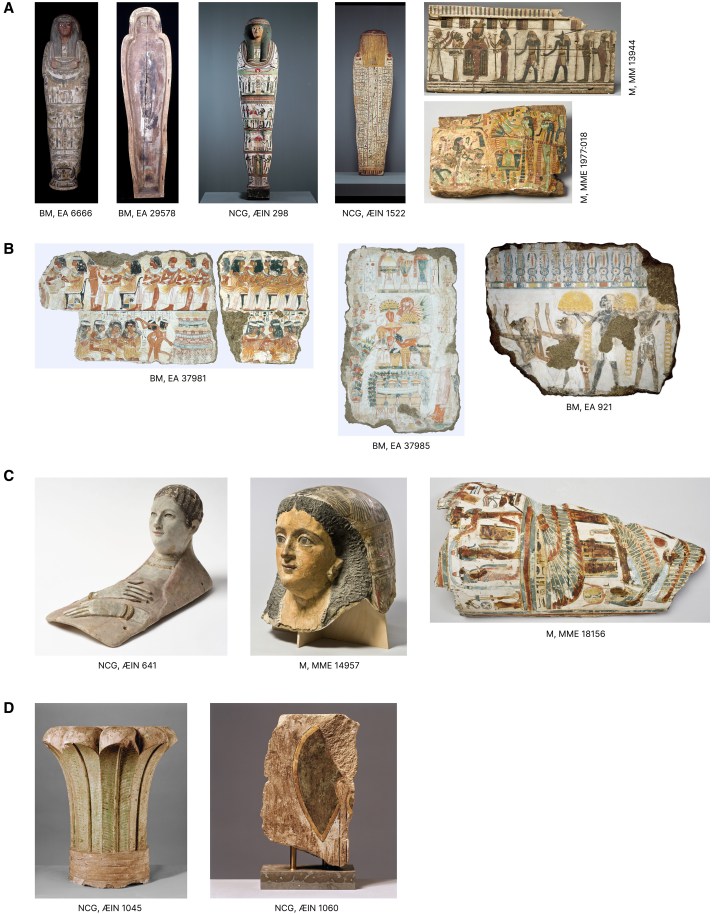
The science in this one is interesting, but I include this more from a writing perspective. One of the best things you can do for your worldbuilding is to include little realistic details, and this paper is full of just the sorts of details I look to incorporate, like which plants and animals were available and useful to a particular civilization. It would also be nice to see more stories set in time periods that aren’t parallel to an anachronistic late Renaissance, like the much older era to which ancient Egypt belongs.
Read more here: Beyond animal glue: Paleoproteomic analysis of paint binders and adhesives in ancient Egypt | Science Advances
Photonic Crystal Modulators
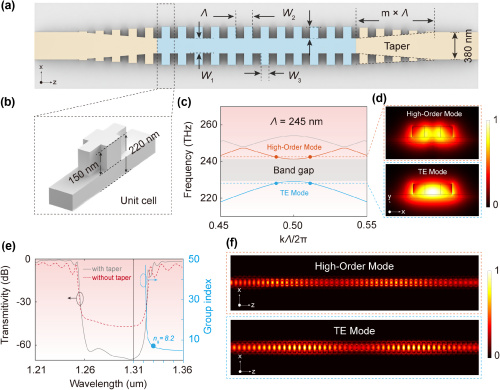
This one is pretty technical, but I don’t think it’s unapproachable if you know a little bit about optics. It explores a type of photonic crystal which enables improved modulation of optical signals on a smaller footprint. Note that this is referring to optical signals within a computer network (think fiberoptics), and not to optical communication like that demonstrated by NASA’s Psyche spacecraft.
Read more here: Wafer-scale miniaturized slow-light silicon modulators for 400 Gbps interconnects
That’s all for this week. If you have questions or have a subject you’d like me to cover in more depth, let me know in the comments.

