A busier week this week, with seven articles featured. We’re looking at the mathematics of percolation, experimental work on quantum gravity, a NASA call for lunar surface technology proposals, a major work on the Navier-Stokes equations, a variation on the triboelectric effect, psychoactive compounds as a key element in Andean civilizational development, and an experiment in altering the surface characteristics of battery electrodes of improve performance. As always, if there are any subjects you would like me to explore in more depths, or if you have any questions about these papers, feel free to contact me, or engage in discussion in the comments.

Mathematics of Percolation
If I’d listened to the people who told me I wasn’t good at math, I would never have become an engineer. It’s true math doesn’t come as easily to me as other subjects, and I don’t imagine I’ll ever be the kind of person who does math “for fun,” but I do enjoy it after a fashion, and I have developed a keen appreciation for it. This proof strikes me as particularly useful for potentially explaining all sorts of physical phenomena.
Read more here: ‘Stunning’ Percolation Proof Solves Decades-Old Puzzle About Phase Transitions | Quanta Magazine

Experiments in Quantum Gravity
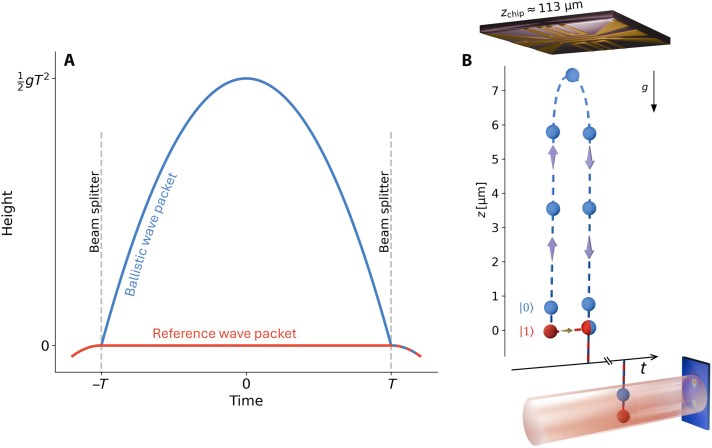
Reconciling quantum physics and general relativity, or developing a quantum theory of gravity, is one of the great physics challenges outstanding. It even plays into the mysteries of dark matter and dark energy. Work in this field is dominated by the theoretical, with some proposed solutions (like string theory, which was first proposed in part to resolve the tension between quantum physics and general relativity) all but untestable by experimental means we are likely to possess in the next few centuries. That makes this paper from Dobkowski et al. all the more interesting, since it details an experimental device to observe a key aspect of general relativity – the equivalence principle – at quantum scales.
Read more here: Observation of the quantum phase of free fall and the consistency with the equivalence principle | Science Advances
Lunar Technologies Call for Proposals
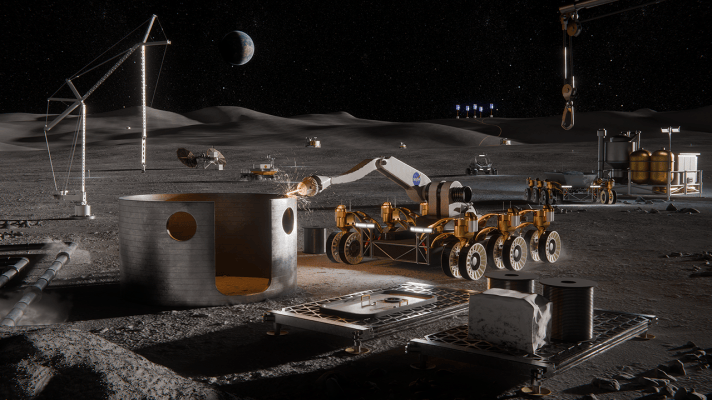
If you have an idea for a new lunar surface technology, NASA wants to hear from you. They’ve announced a call for proposals focused on five areas: vertical solar arrays (including energy generation, storage, and distribution), oxygen production from regolith, radioisotope Stirling generators, in-space manufacturing, and nanomaterial production. These are all exciting as potentially enabling technological capabilities for future lunar activities.
Read more here: NASA Calls for Proposals to Accelerate Lunar Surface Technologies – NASA
Navier-Stokes Blow-up?
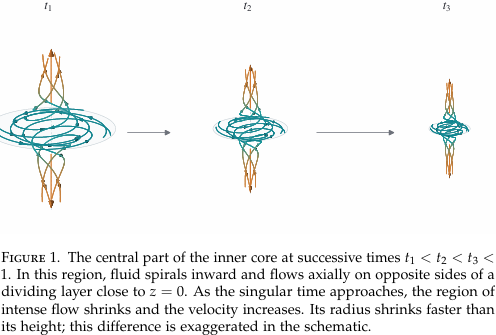
For about two hours when I was in college, a friend and I thought we’d solved the Naiver-Stokes equations. We were working on a problem involving aerobraking the Death Star around Mars (well, we were actually assuming a spherical spacecraft entering the Martian atmosphere because it vastly simplifies the calculations compared to other geometries, but it was fun to title the paper “Aerobraking the Death Star around Mars”), for which we used the Navier-Stokes equations. However, we did not win a million dollars or the various prizes associated with solving one of the great outstanding problems in mathematics; after a bit more work, we realized all we had accomplished was re-deriving the equations in terms of energy instead of force. The Navier-Stokes equations are used to describe three-dimensional fluid dynamics under a variety of circumstances, but they famously resist analytical solutions. Now, OpenAI claims in a new paper that one of its models proved a singularity exists in the incompressible version of the Naiver-Stokes equations. If true, this is a major advance in both mathematics and physics, but it will take time for mathematicians to verify the result. I haven’t finished reading through the 166-page paper yet, either.
Read more here: navier-stokes.pdf
Triboelectricity – with Plasma
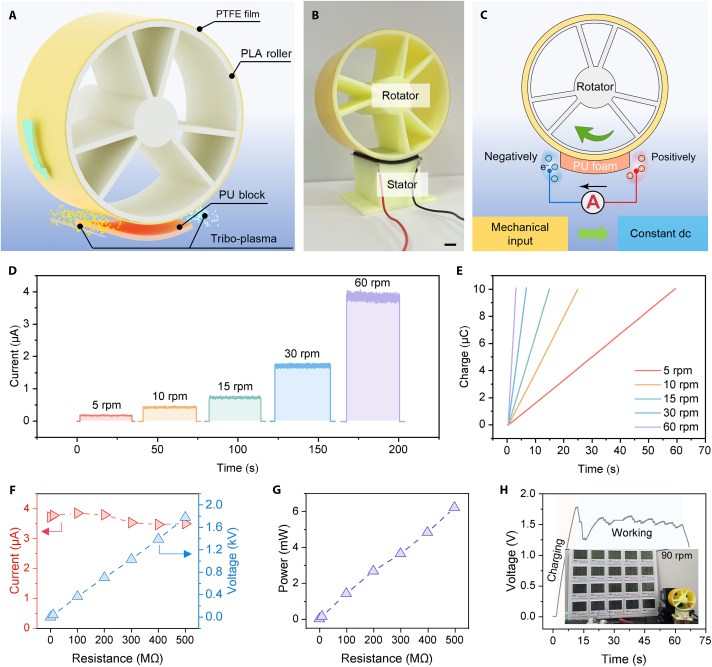
Most energy harvesting from the triboelectric effect is achieved by leveraging the potential difference which develops from the exchange of charges between the layers of the system. Zeng et al. provide an alternative approach which can be far more finely tuned, involving the use of associated plasma emissions. This might sound like it requires for more exotic techniques and materials than the simple TENGs I helped design for a sounding rocket experiment, but it can apparently be done with apple slices.
Read more here: Harnessing in-situ tribo-plasma emission for energy harvesting | Science Advances

Psychoactive Civilization
I debated over including this, since it’s not really tied to a specific, newsworthy discovery or insight. Ultimately, my interest in history and ancient civilizations won out, and it is a worthwhile piece for how it compiles the current research and state of understanding regarding the effects of psychoactive compounds on the development of cultures throughout history. Note how different cultures within the same region and tradition used the compounds in different combinations and contexts to achieve different types, levels, and acuteness of effect.
Read more here: Mind-altering drugs played key role in rise of Andean civilization | Science | AAAS
Textured Electrodes
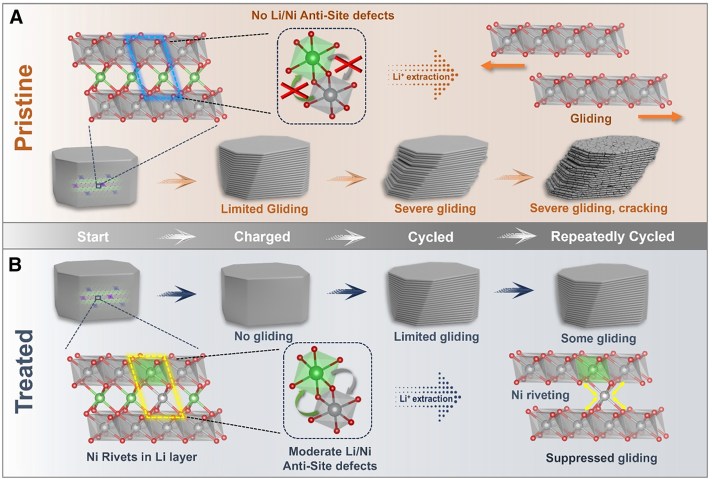
Battery technology is one of the most significant areas of applied technology research these days. Electric cars, tools, and appliances are the most visible manifestations, but batteries are increasingly ubiquitous, and their performance a target of constant improvement and optimization. I try to stay abreast of such research, although I will admit I am no specialist. There are so many variables to consider, and this paper highlights how a change to just one variable – the uniformity of the electrodes – can have profound impact on key performance parameters.
Read more here: Suppressing gliding in Ni-rich single-crystal cathodes by defect engineering: Joule
That’s all for this week. If you have questions or have a subject you’d like me to cover in more depth, let me know in the comments.

