
This week’s selection of articles is back to being heavy on the space side, with a bit more of a focus on news/updates as opposed to technical developments. Not that you’ll have any shortage of research papers to peruse, including on astrophysics and materials science. In other news, the leap second’s demise has been accelerated, with the committee responsible for its oversight voting to axe it immediately rather than waiting for 2035, as originally planned. It will be replaced by a leap hour, which is likely not to be implemented for hundreds or thousands of years. I still think uncoupling our international timing standard from the astronomical rhythms upon which humanity built its understanding of time will have unfortunate consequences, but I doubt anyone on the committee of weights and measures reads these posts, and the scientific community is certainly projecting consensus around this matter.

Propose your own space station
As you might remember from previous posts, the ISS is supposed to be decommissioned and deorbited in 2030. Or 2028. Or 2032. Several dates keep being mooted about, for a variety of reasons mostly having to do with budgets and safe government contracting jobs in congressional districts, but also because of lingering uncertainty over its successor stations. Most in the space industry agree that having a gap in human occupation of low earth orbit would be a mistake, but the path to sustaining that presence is contentious at best. Commercial space stations are usually cited as replacements for the ISS, but development on these has been slow, and it hasn’t been helped by a lack of clear demand signal from the federal government, which remains far and away the anchor tenant for such a project. Finally, NASA is issuing what it calls a final request for proposals on the matter. Hopefully, this will give industry players the confidence and certainty they need to push forward with bringing their projects to fruition. At some point, whatever policy might say about the matter, technical problems will force our hand regarding the ISS’s retirement.
Read more here: SAM.gov and NASA Seeks US Industry Plans for Commercial Space Stations – NASA
Testing of Opportunity
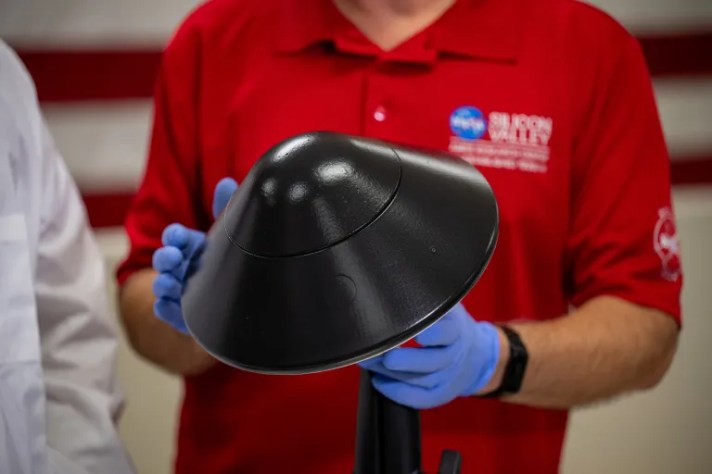
Atmospheric reentry remains one of the most challenging aspects of space travel, the basic technology hasn’t changed much since the Space Shuttle, and further development is hampered by the limitations of our modeling and simulation technologies and the expense and complexity of performing useful, real-world tests. Here, NASA is highlighting important heat shield development work that uses the incidental reentry of used ISS cargo vehicles as an opportunity to test new heat shield designs, configurations, and materials.
Read more here: NASA Demonstrates Next-Generation Heat Shield Technologies – NASA
Vulcan Return to Flight?
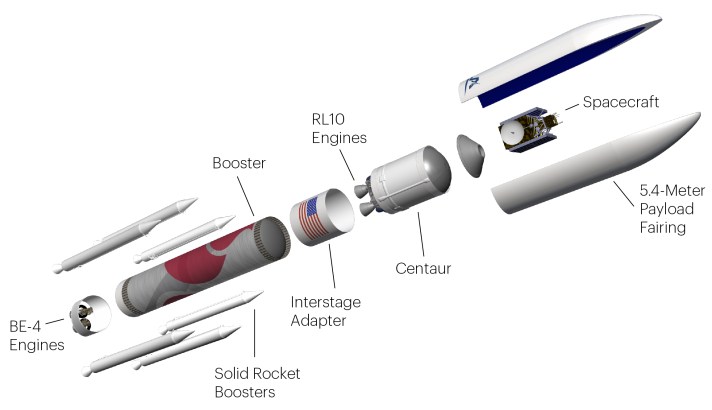
I am highlighting this article for just one tidbit, which is the quote that ULA’s Vulcan rocket is “weeks away from launching.” ULA has been recalcitrant in its communications about return to flight since its new (and soon to be only) vehicle was grounded early this year, so this is the firmest statement I’ve yet seen of an imminent return to flight. You can probably ignore the rest of the article, which doesn’t really have anything significant to add to what’s already known about Amazon’s LEO internet effort.
Read more here: Amazon builds 1,000th satellite, will launch space internet service by end of year – Ars Technica
The Power of Garlic
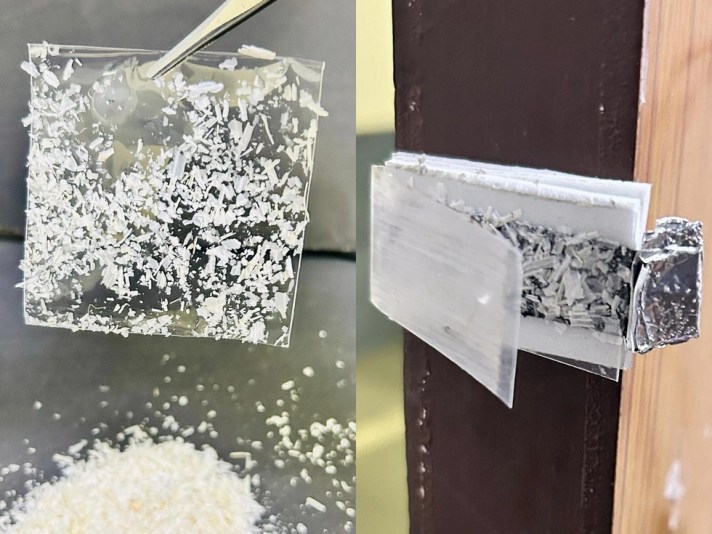
As much as I enjoy garlic, peeling it is something of a pain. Not only is it a messy process, and there’s dealing with the occasional stubborn clove, but once you have those paper skins freed, they have a tendency to get everywhere before you can transport them to the trash or the compost bin. This project doesn’t solve that problem, but it does come up with a rather inventive use for those garlic peels. It makes sense if you stop to think about it – the peels do tend to possess a fair amount of static electricity – but what makes sense in retrospect does not make it obvious that garlic peels could be used to create a triboelectric nanogenerator to power low-cost sensors.
Read more here: Garlic Peel-Powered Sensor Puts Biowaste to Use – IEEE Spectrum
No Hypernovae?
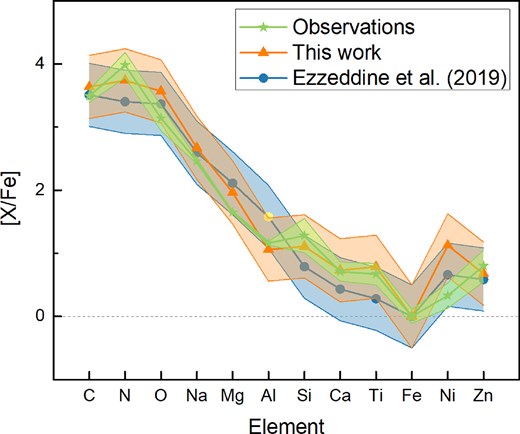
When astronomers saw evidence of explosions which looked to be ten or more times more powerful than supernovae, they naturally named them hypernovae. These were supposed to be the largest explosions in the universe, produced during antimatter-fueled reactions in the death throes of certain types of enormous stars. Unless our interpretation of these explosive remnants was wrong, as Aggarwal and Schonrich suggest in a pair of papers. Essentially, they propose that what was once interpreted as hypernovae remnants can be better interpreted as asymmetric supernovae remnants.
Read more here: Mixing stochasticity relinquishes evidence for magnetorotational hypernovae | Monthly Notices of the Royal Astronomical Society | Oxford Academic and unexplored enrichment stochasticity and its implications for stellar abundance patterns | Monthly Notices of the Royal Astronomical Society | Oxford Academic
Better Alloys with Dirty Metal
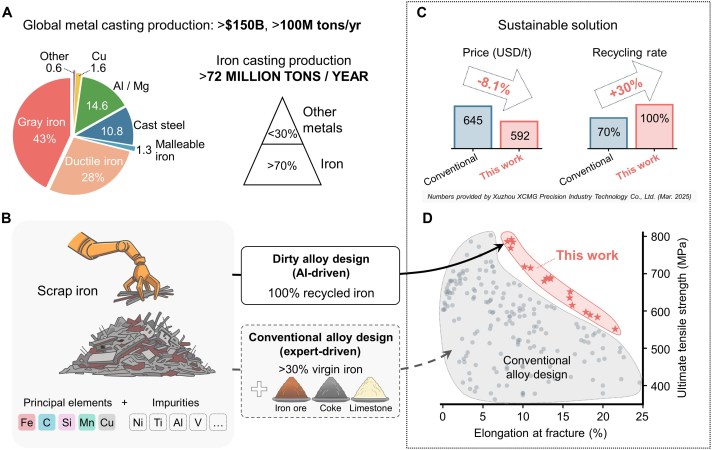
Recycling is such a fascinating problem. There are reasons it comes last in the “reduce, reuse, recycle” maxim: it’s technically complex, it requires significant effort just to prep the materials for processing, it usually requires a significant input of additional energy to produce a useful output, it is often economically and/or energetically cheaper to use virgin material, and the products and materials produced by recycling processes are often inferior to raw materials. Yang et al. do not address all of these reasons, but their paper on transforming contaminated metal feedstocks into alloys with superior properties is fascinating on several levels. First is the material itself, and the recycling process used to produce it, which exhibits properties superior to those of the original iron in certain respects because of how it takes advantage of the contaminants in the recycling stream. But the process by which the developed this alloy is interesting in its own right.
Read more here: From scrap to prime: Designing high-performance alloys from dirty feedstocks with machine learning | Science Advances
That’s all for this week. If you have questions or have a subject you’d like me to cover in more depth, let me know in the comments.

