
In a rare occurrence, none of the five articles I’m sharing this week are directly related to space or space technologies. There were a couple I could have shared, but none of them were especially compelling to me, so I stuck with this selection on RF cybersecurity concerns, a neuroscientific look at homeostasis and human sociability, a new plywood adhesive, a new type of actuator for soft/flexible robots, and a formulation and characterization of a heat storage medium based on sugar and alcohol.

Actively Overcoming the “Airgap”
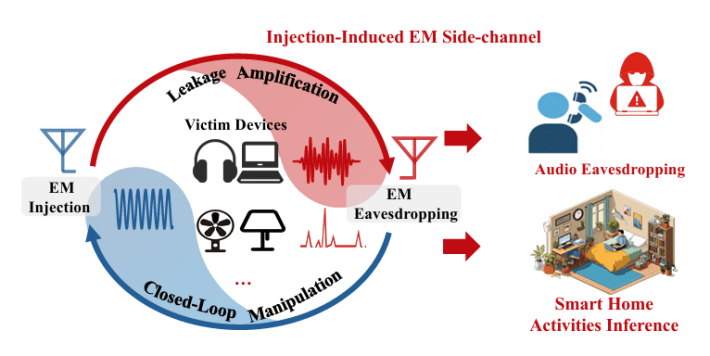
Cybersecurity is one of those fields in which I consider myself amateurly informed and professionally paranoid. Most of the people I know who are really deep into the field don’t allow internet connections to their homes, don’t use smart phones, and rotate their cell phone and service provider weekly. Research like this suggests we’re right to be paranoid. You might think making a system “airgapped,” so it’s not networked to anything else, would mean it’s impossible to break into it without having physical access, but that’s not the case. Every wire and conducting element in a device is a potential antenna potentially broadcasting information which someone could listen to if they have the right equipment and algorithms. Now, it turns out that such RF emissions can actually be induced even if the device is not natively radiating. Excuse me while I build a faraday cage into my home insulation.
Read more here: Injected and Leaked: Actively Inducing Side-Channel Leakage Using Electromagnetic Injection and Hardware Nonlinearity
Steadier Together?
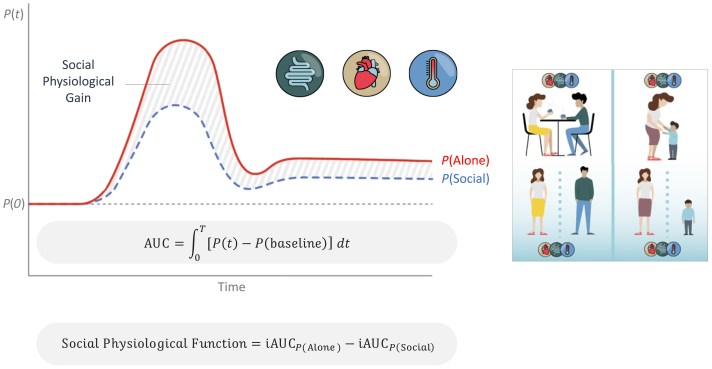
This is an odd one, and it would be exceptionally easy to overstate the results. Essentially, the researchers found a correlation between social context and the efficiency of some homeostasis mechanisms in humans. The depth and rigor of that correlation, potential causation involved, and the extensibility of the results remains to be seen.
Read more here: Social Physiology: Human homeostasis is more efficient in social proximity | Science Advances
Better Plywood Glue
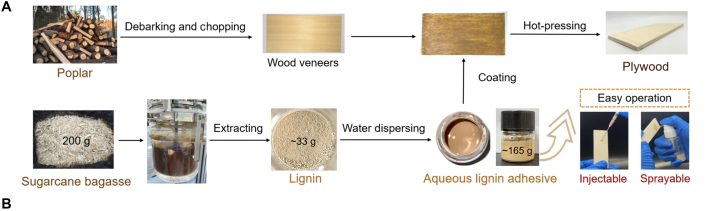
Manufacturing glues is one of the oldest deliberate chemical processes humans developed, and innovations in adhesive technologies continues today. This paper is particularly interesting, looking at an adhesive which could have significant utility in plywood manufacturing. The authors don’t explore a cost comparison, though, and I’ve been reading papers like this one for long enough to remain skeptical of seeing this particularly innovation or formulation deployed at scale in the “real world.”
Read more here: Aqueous lignin adhesive for high-performance wood bonding | Science Advances For additional information about plywood glue, I recommend Episode 41 Plywood Glue and Q&A | Shannon’s Lumber Industry Update.
High-DOF Actuator
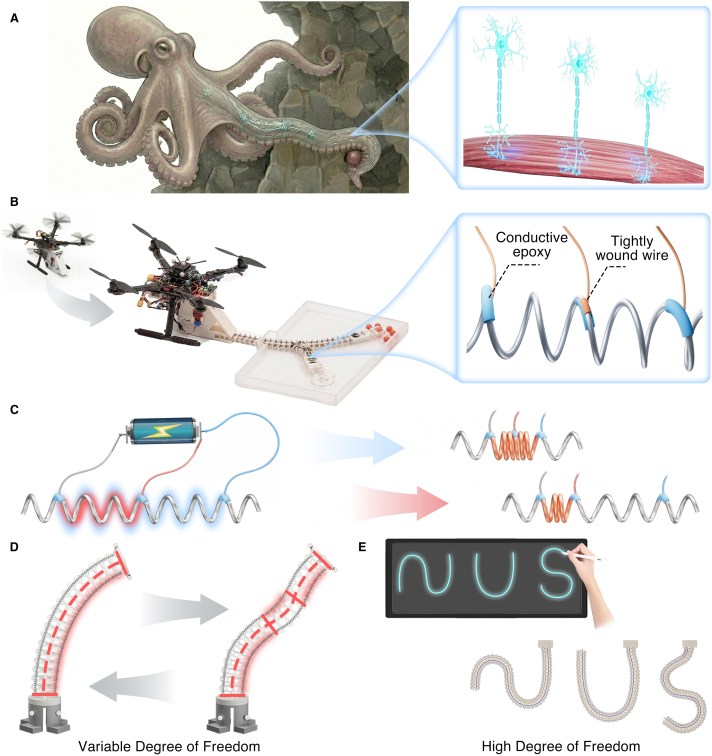
Bioinspired technology is a whole subfield of its own, and it has been hugely influential on developments in robotics over the past decade. That’s especially true for innovations in soft robotics, like in this paper from Xin et al. describing a new actuator design for soft robots which offers a higher degree of freedom than traditional actuators and is based on octopus neuromuscular junctions. If nothing else, I encourage you to watch the supplementary videos.
Read more here: Octopus-inspired muscle activation unlocks high-DOF motion from a single actuator | Science Advances
Sugar-Alcohol Thermal Battery
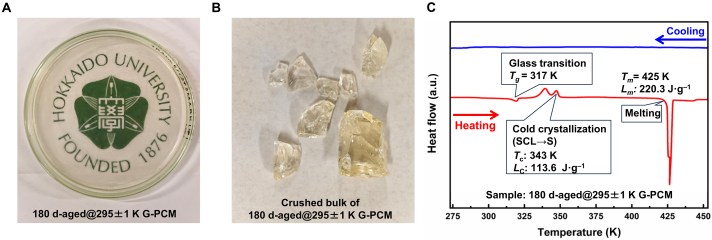
From the title, I expected this paper to focus on the material properties and potential applications of the described substance, but the authors instead focus on its utility as a kind of heat battery. It’s still an intriguing read, especially with the way it explores the peculiar (and still poorly understood) phase transition process. I would be curious to dig deeper into the properties of this material to see how it could be useful for other applications than just in thermal batteries.
Read more here: Third-generation ultralong-term latent heat storage glass based on a sugar alcohol mixture | Science Advances
That’s all for this week. If you have questions or have a subject you’d like me to cover in more depth, let me know in the comments.

